
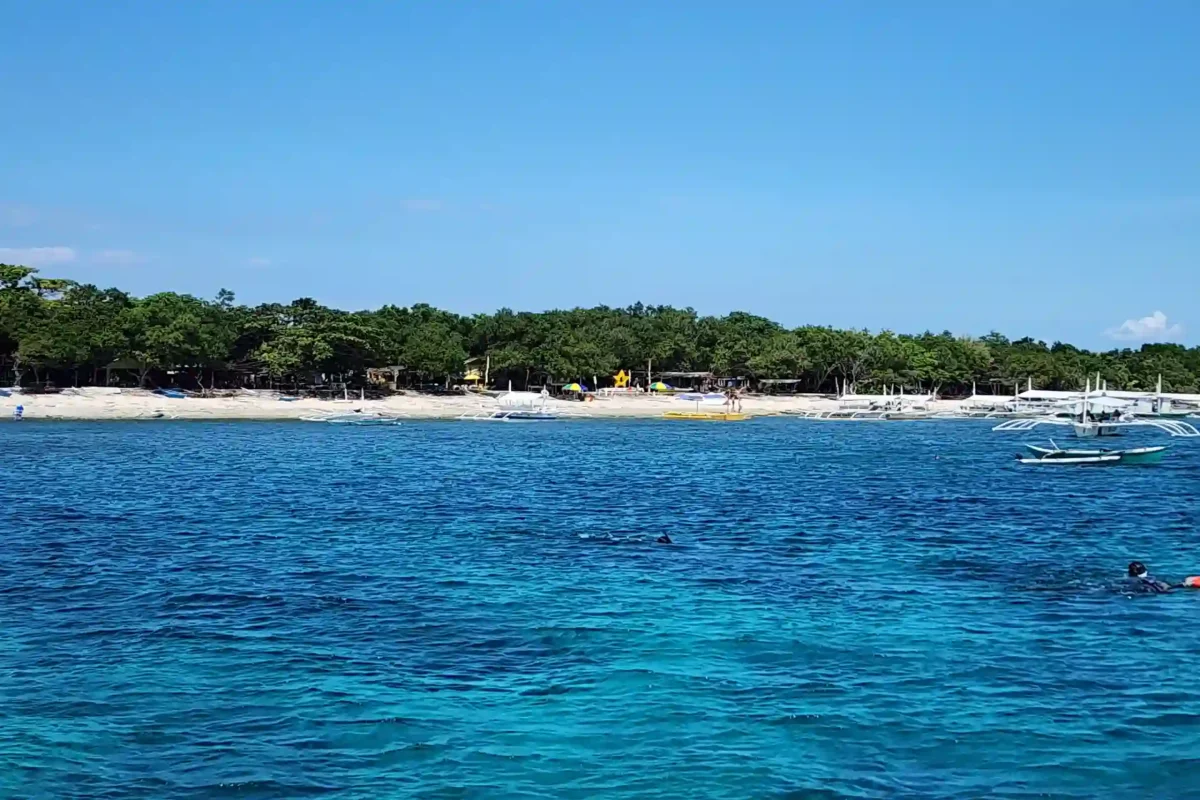
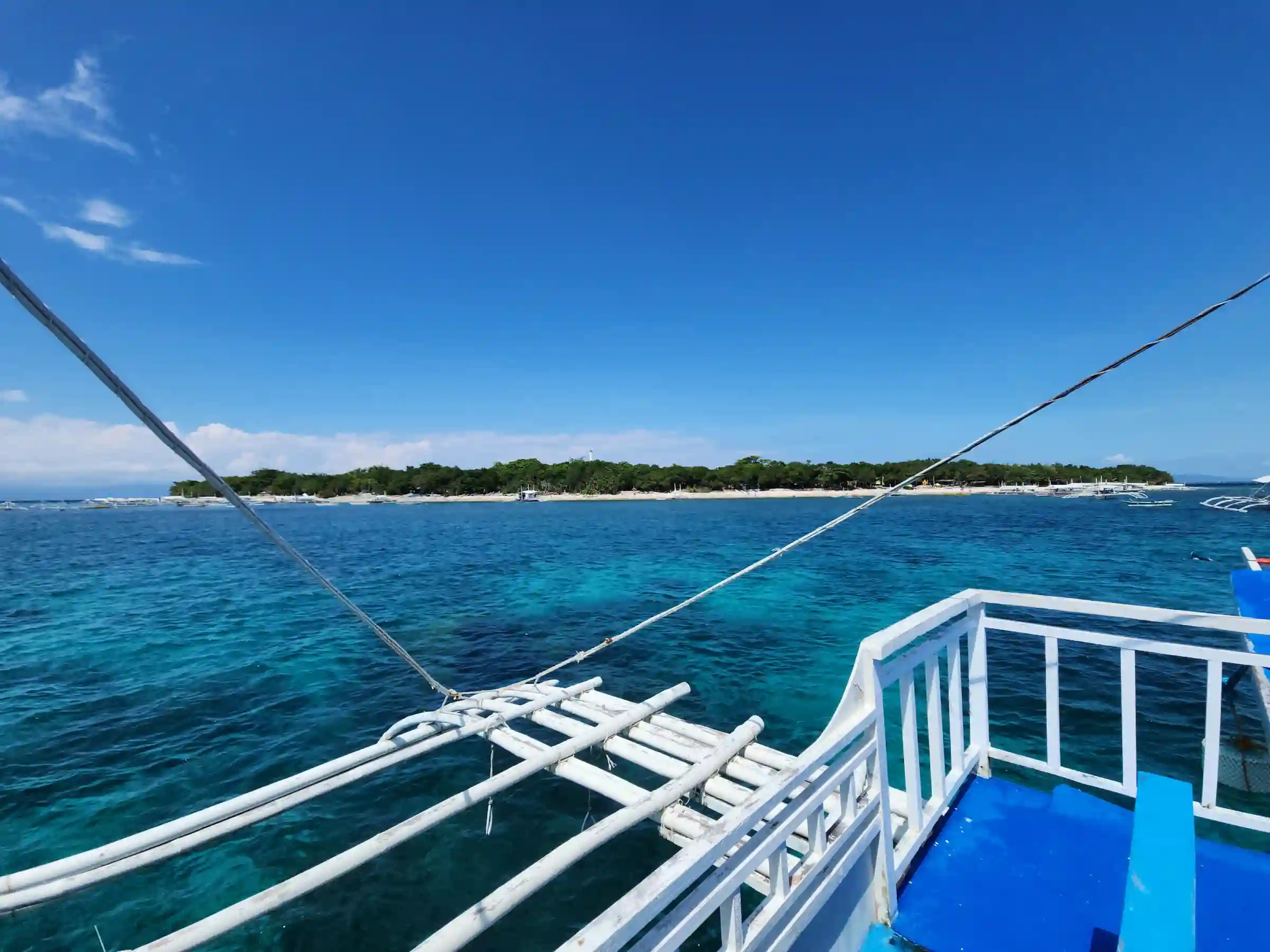
The water off Balicasag Island is the kind of color that looks edited even when it is not. Standing at the bow of the bangka on the morning of January 21, 2026, watching the island take shape on the horizon, the teal shifted and deepened beneath the hull as if the sea were switching registers. The island itself appeared low and dense, a dark green band of trees pressed flat against the sky, with the white stripe of its shoreline only becoming clear as we closed the distance.
We came as a group. My brother Marby, his girlfriend, her siblings and relatives, and their nephews and nieces filled most of a full boat chartered from Purok 2 Tugas in Panglao, Bohol. The tour was arranged through contacts the family already had, which made logistics easier than anything you would put together on foot at Alona Beach. The bangka, registered CV-BHL-01225-47 and operated under the Sebastiana name printed on every life vest, held up to 30 to 35 passengers including children.
Balicasag Island is a protected marine sanctuary located off the southwest coast of Panglao Island in Bohol Province, and it draws snorkelers and divers specifically because the turtles are present and visible with regularity. What most articles and booking platforms rarely describe is how the experience actually unfolds from the water. You do not enter from a beach. You enter from the side of an anchored bangka, over a reef flat clear enough to read the bottom through even in the chop.
Getting to Balicasag Island from Panglao via Danao
The route from Purok 2 Tugas begins with a van transfer to the Danao jump-off area, the departure point for the boat leg. From Danao, the bangka heads out first for dolphin watching before turning toward Balicasag Island. The sequence matters. Dolphin watching happens in open water while conditions are still calm and the morning light sits at a lower angle, and by the time the boat swings toward the sanctuary the group is already settled into the rhythm of being on the water.
The crossing itself is not just transit. Early in the passage, the island is barely a smudge on the horizon, and it grows slowly at first, then quickly, the lighthouse emerging above the tree line before the white shoreline fills in beneath it.
What Balicasag Island Looks Like When You Arrive
From the water, Balicasag Island presents itself as a continuous band of pale sand edged by dense trees, with no tall structures visible except the lighthouse rising from the interior. Dozens of bangkas are moored in a loose row along the nearshore shelf, their white outriggers fanned out over water clear enough to see the reef through. Snorkelers are already in the water before your boat finishes anchoring.
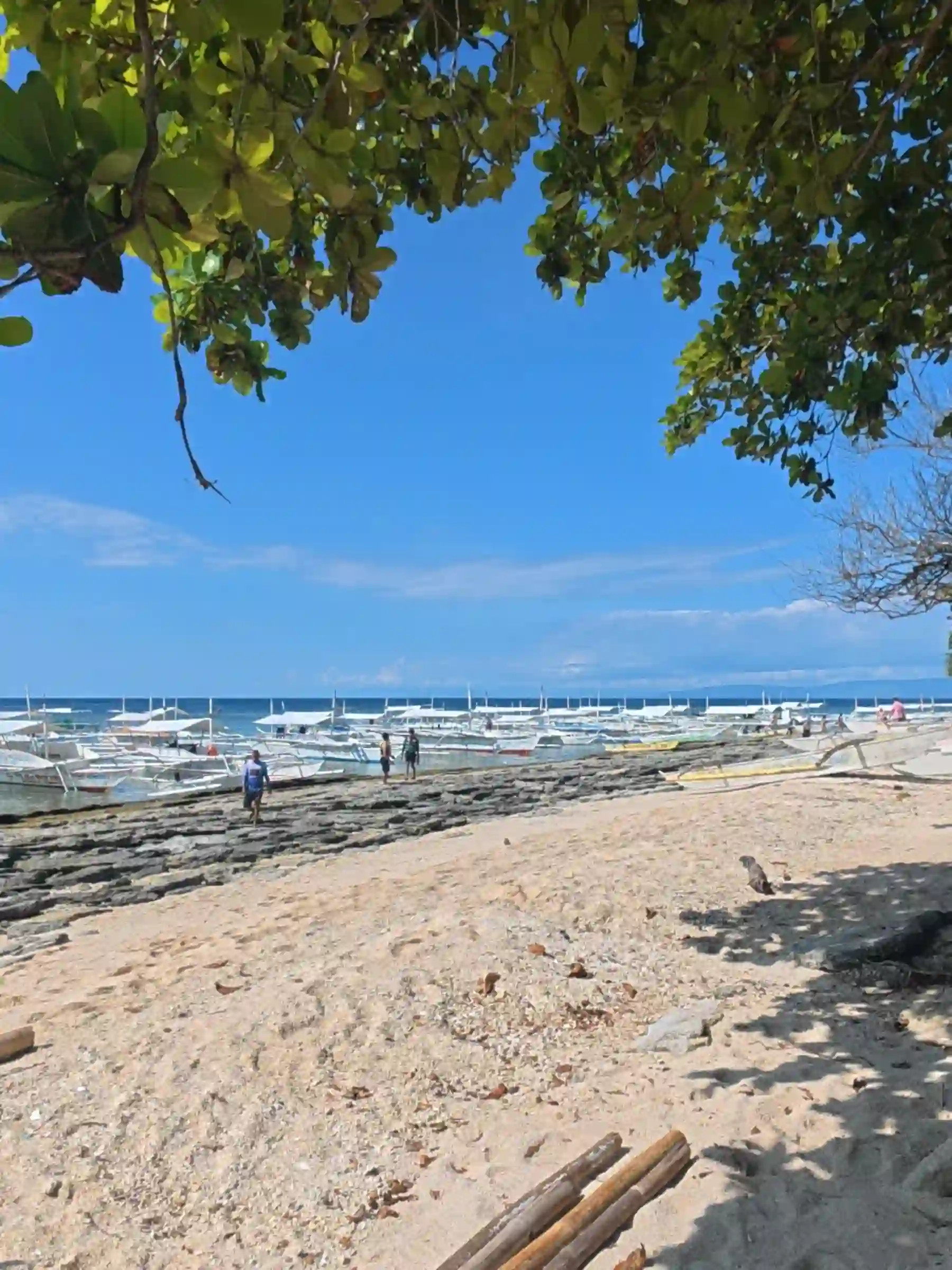
The shoreline itself, when you step onto it to collect your gear, is not the refined white sand of a resort beach. The texture is coarser, mixed with broken shell and small rubble, with logs stacked in the shade of the trees and the general working feel of a place that moves a lot of boats in and out every morning. Sand dries quickly on your feet after you leave the water. Nobody lingers here by choice. People come for what is below the surface.
Snorkeling masks and fins were included in the tour package and collected from the island on foot. This is worth knowing before you go. You do not gear up on the boat. You step down onto the island, collect the equipment from the designated area, and then re-enter from the bangka's side ladder or drop directly from the outrigger platform into open water.
Snorkeling Balicasag Island Bohol: The Reef and the Fish
The reef beneath the snorkeling area sits close enough to the surface that light reaches the bottom and illuminates it from above. Entering from the bangka's side ladder, coral formations become visible almost immediately, spread across the sandy floor in irregular dark clusters. The fish do not scatter. They move in loose groups at middle depth, unbothered by the number of bodies in the water around them.
The most visible among them were large striped fish, silver-bodied with horizontal bands running from head to tail and an orange tint near the eye, hovering in groups of four and five a few feet above the reef. They drifted rather than darted. That steadiness made photographing them at close range possible without constant repositioning, and the smaller fish near the coral heads provided contrast by moving in faster, tighter patterns that kept the scene active.
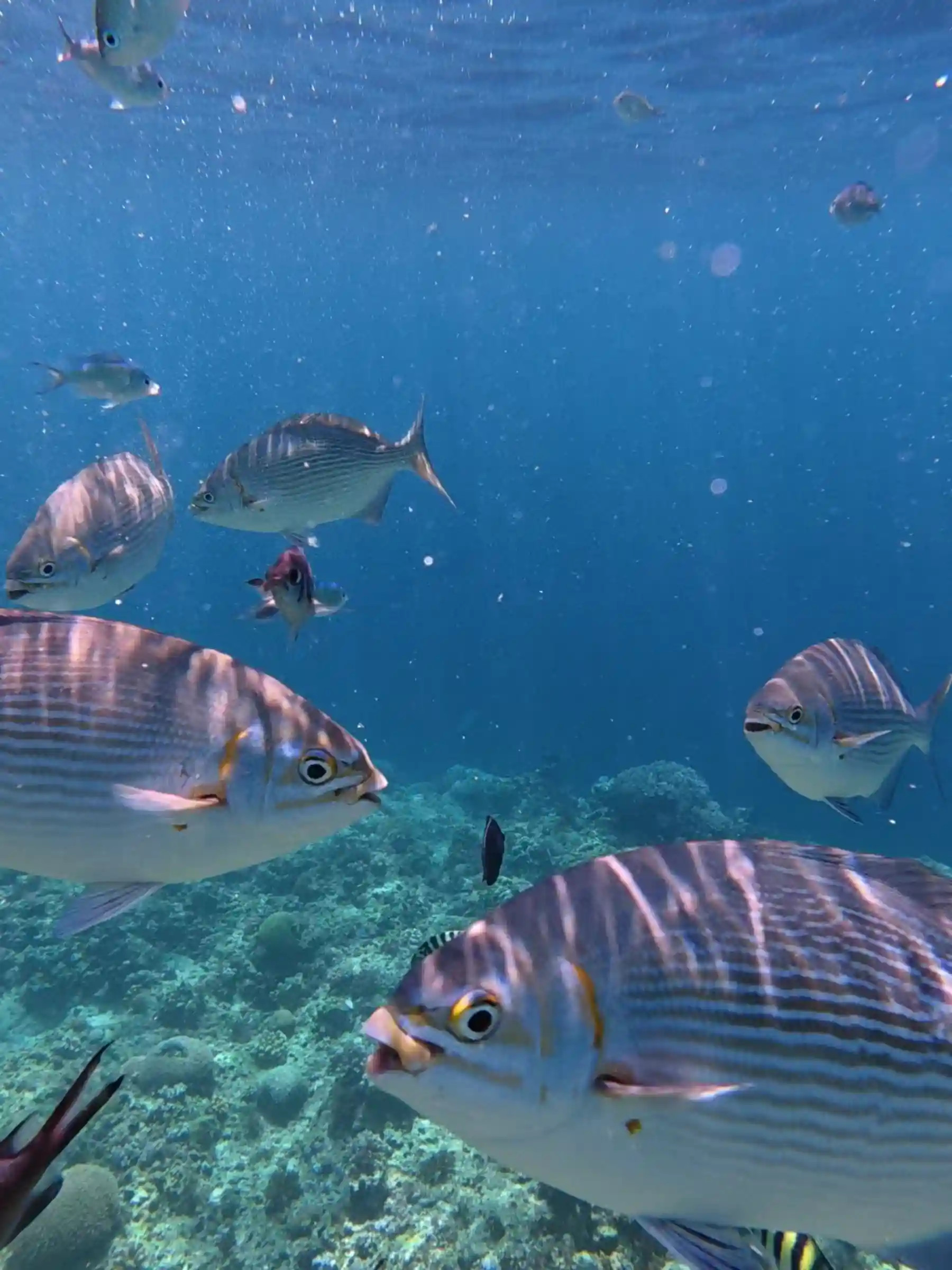
Free diving down toward the reef brings you into a different register of the space entirely. The coral clusters spread wide at the bottom, the blue deepens above you as you descend, and bubbles rise around you while surface light refracts in shifting sheets. The depth is manageable without scuba gear. A breath hold gets you within a few feet of the bottom before you need to turn back up.

The Sea Turtle Encounter at Balicasag Island Bohol
The turtle appeared at the surface. It was not below us when we first noticed it. It came up from the mid-column, its shell pattern of dark brown and cream visible in the teal water before it broke through to breathe. That detail caught us off guard. The assumption going in was that sea turtles stay submerged, but they are air-breathing reptiles and they surface regularly, and at Balicasag they do so right in the middle of the snorkeling area, close enough to reach out and touch, which is not permitted.
The rule at the island is firm on this point. No touching the turtles. The one we encountered moved without any urgency, surfacing and taking air before descending again, passing parallel to the group rather than away from it.

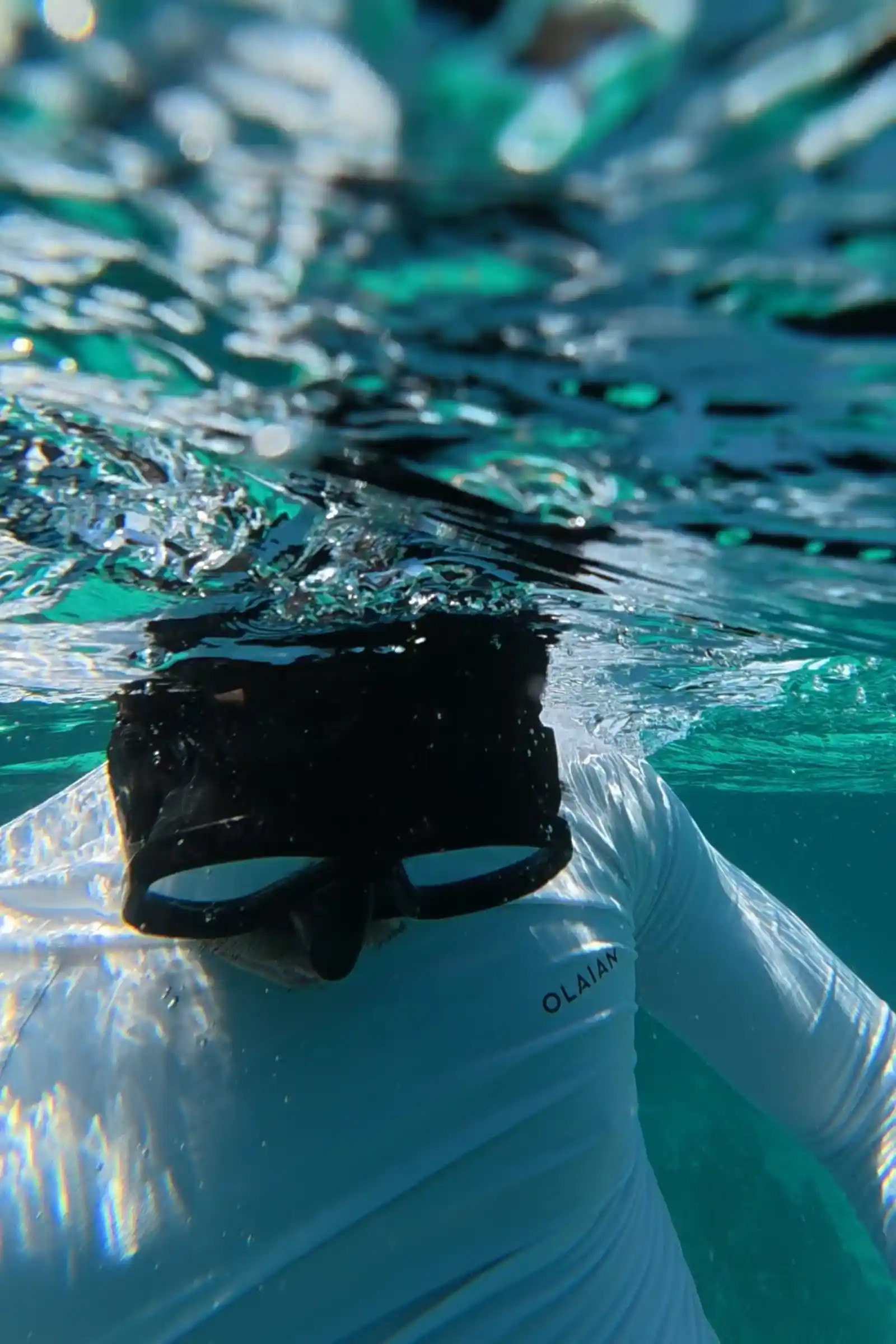
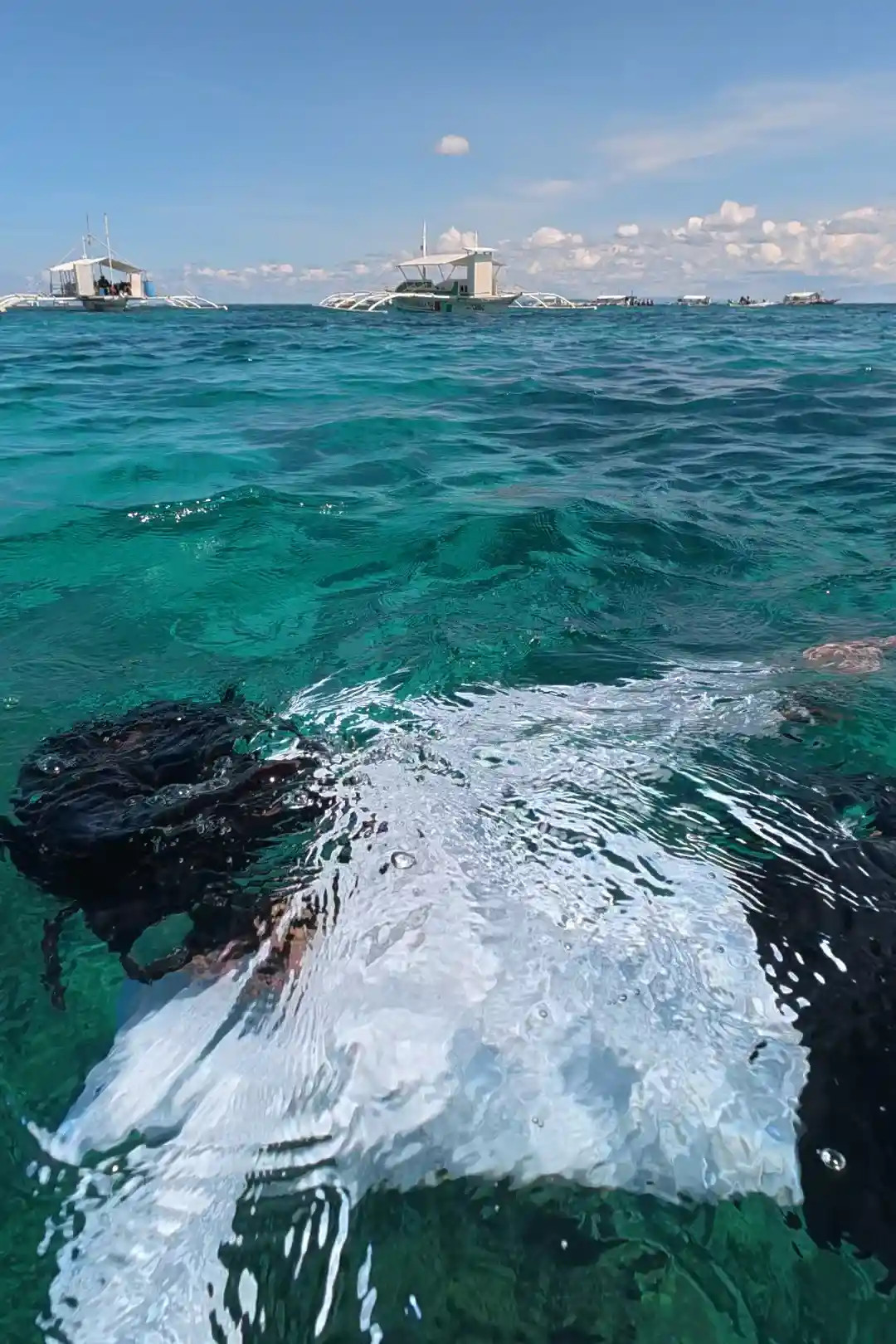
Getting this shot required being at water level rather than above it, which meant submerging the camera at the exact moment the turtle surfaced. The frame is split between air and sea, with the turtle's shell and head just breaking through, and the bangkas in the background anchoring the scale of the moment. The water around the hull does not need to be empty for the image to carry weight.
What the Boats and the Crowds Actually Look Like
Balicasag Island draws a significant number of boats on any given morning, and the images from this visit confirm it. Looking out from the bangka toward the snorkeling area, multiple outriggers are anchored in a loose cluster with snorkelers threading the gaps between them. This is not an isolated corner of the ocean. The reef is shared, and the visit happens alongside other groups, always.
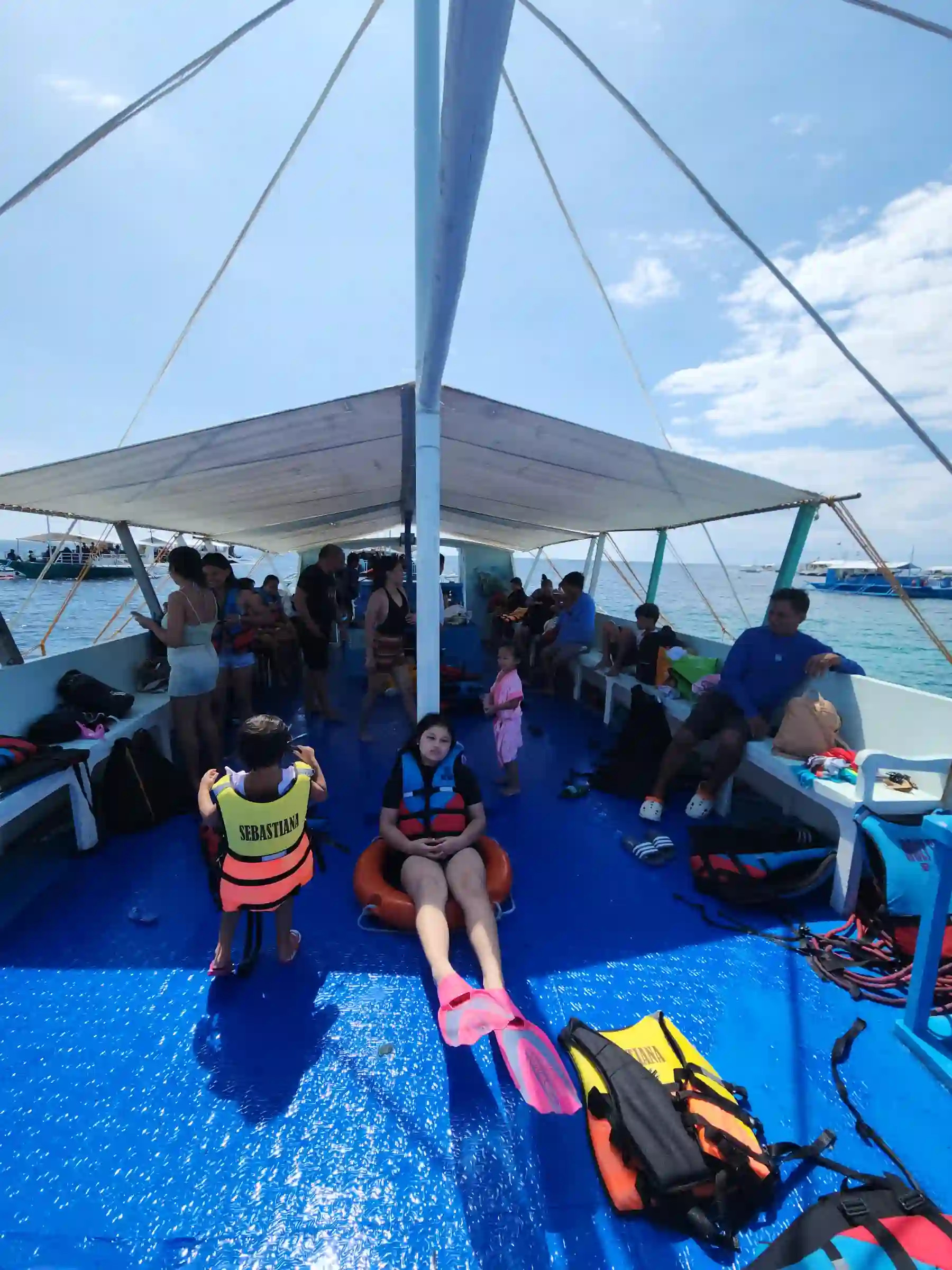
The water is wide enough and the fish numerous enough that the presence of other people does not diminish what is below the surface. What it does change is the energy on the boat deck. The Sebastiana is a large vessel. Children were in life vests and in the water early, adults rested on the benches between swims, and the general mood was celebratory and loose rather than quietly reverent.


Shooting Balicasag Island: Notes for Photographers
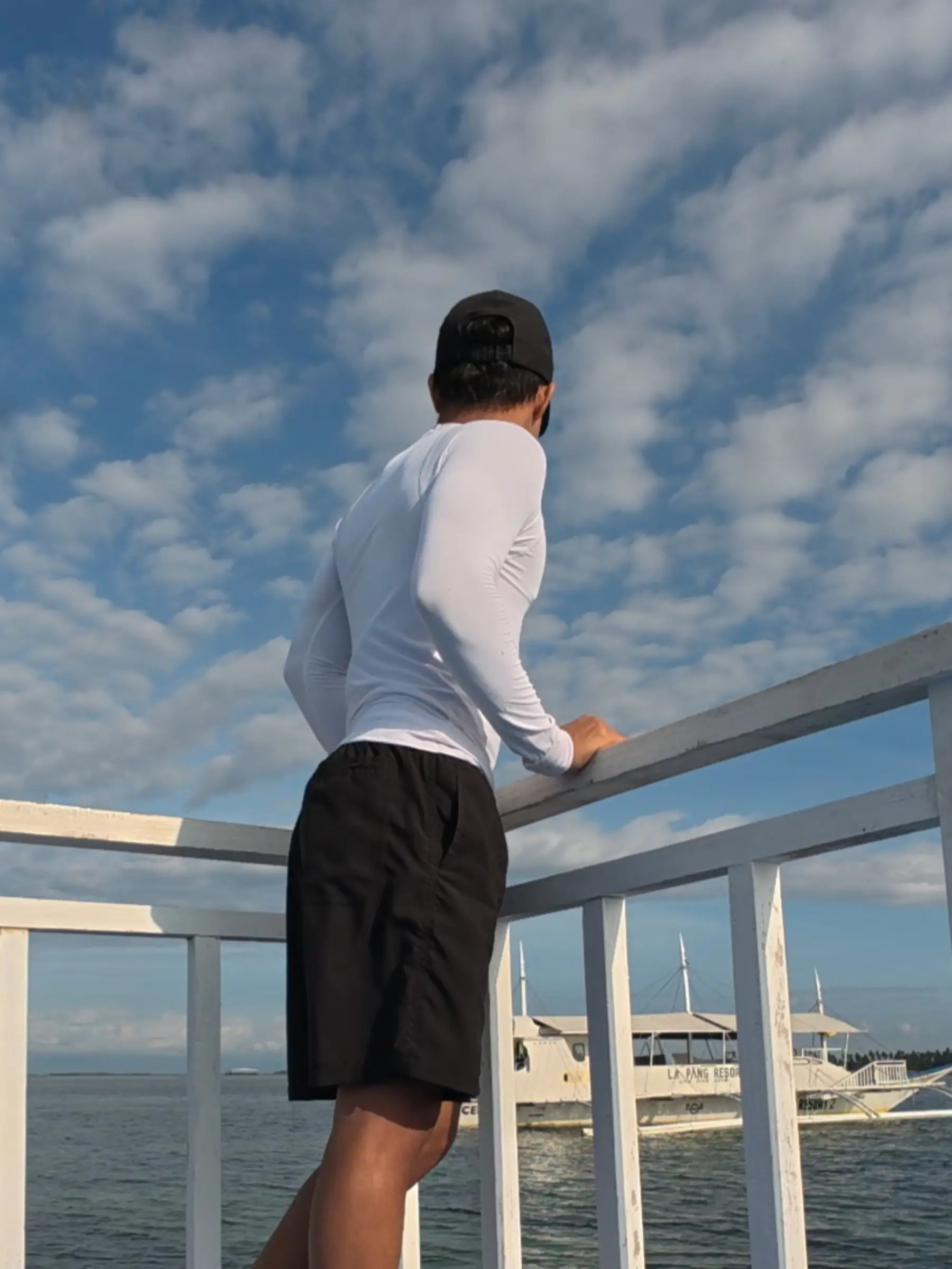
The images in this set came from two cameras. The Samsung S22 Ultra handled everything above water, covering the deck scenes, the island profile shots, and the portraits on the outrigger. The DJI Action 4/5 Pro handled the underwater work, including the turtle sequence, the fish at depth, and the waterline surface shot. No drone was used on this trip.
The most useful position for underwater photography at Balicasag is directly in the water, not shooting down from the boat. Shooting from above compresses the scene and loses the water column depth that makes reef images feel immersive rather than flat. Getting low, at the waterline or below it, is where the frames worth keeping tend to come from. The turtle shot worked because the camera was already at water level when the turtle came up, not because the moment was anticipated or staged.
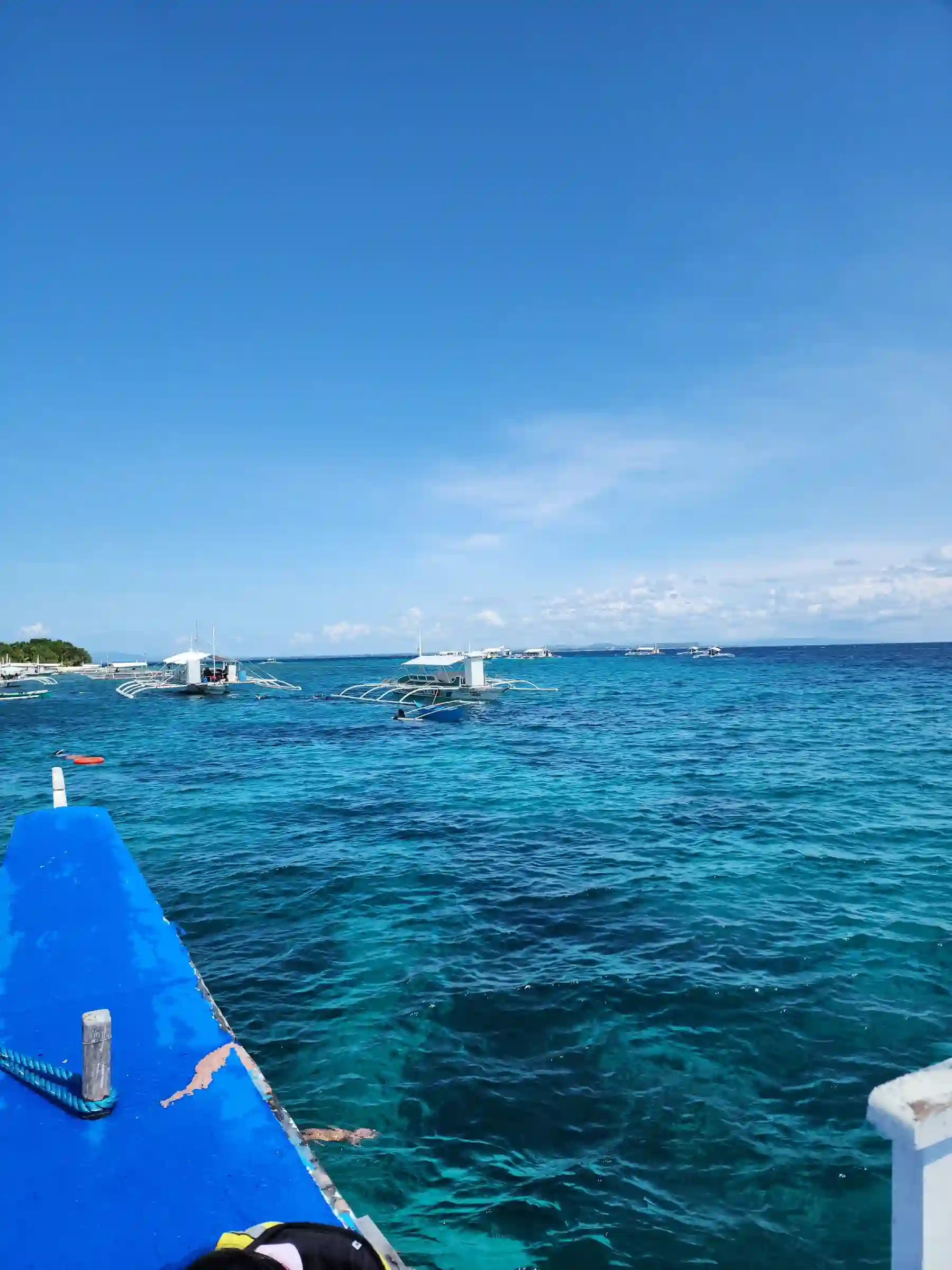
For wide establishing shots, the bow of the bangka frames the island well while the boat is still moving. The outrigger poles cross in the foreground and give depth to an otherwise flat horizon. That geometry is already there when you walk to the front of the boat. You just have to be there early enough, while the island is still some distance ahead.

What You Eat and Who You Are With
Food on this tour came from what the group brought. Ripe saging saba, pancit, and juices were available through the day, eaten on the deck between swims rather than at any fixed meal point. There is no restaurant stop built into a charter like this one. The eating is informal, timed to hunger rather than schedule, and the boat becomes the dining room by default.
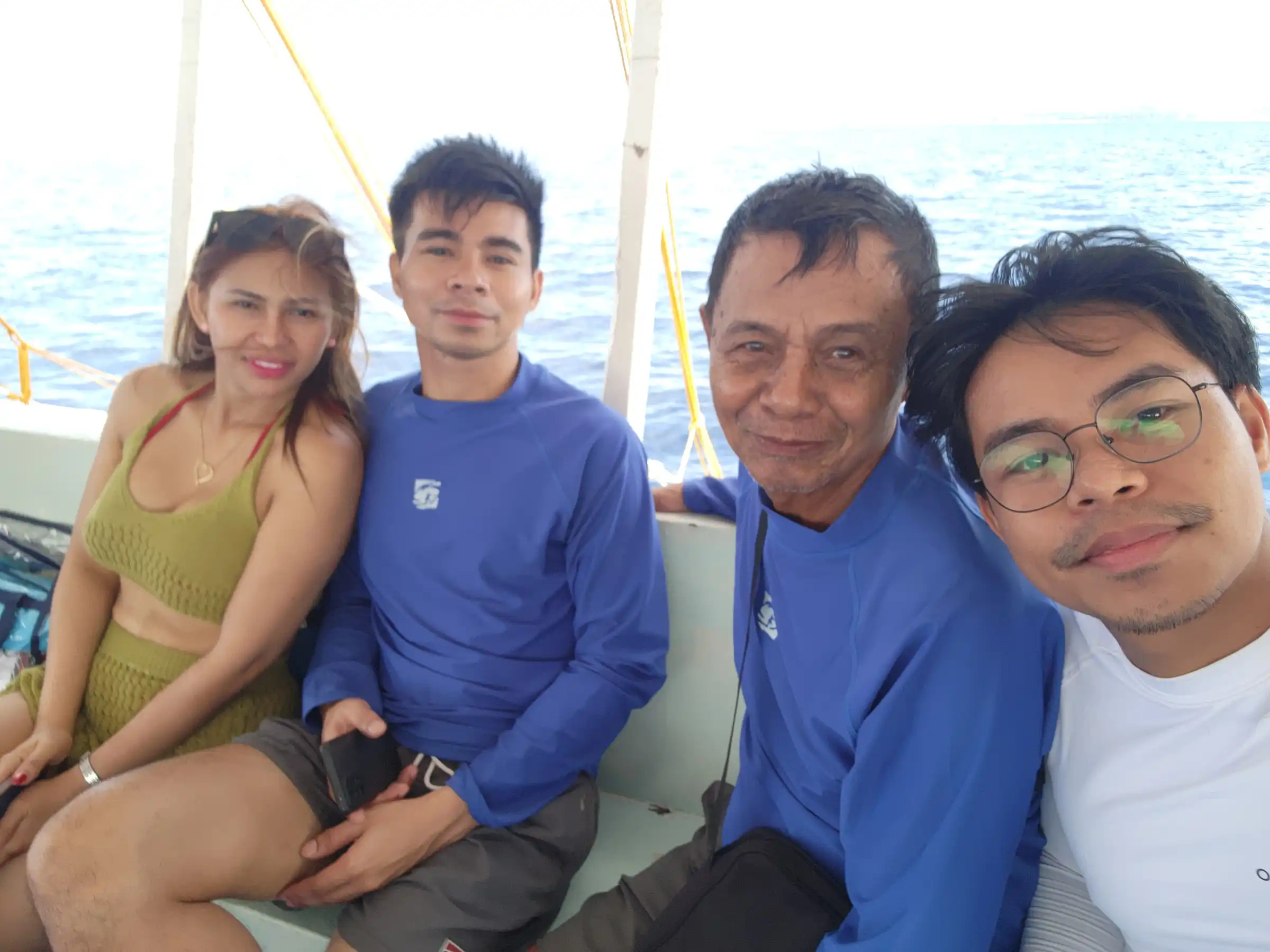
Chartering a full boat versus joining a group tour changes both the cost per head and the atmosphere. The Sebastiana at 8,000 pesos for up to 30 to 35 passengers, children included, comes out significantly cheaper per person than an individual package arranged at Alona Beach, provided the group is large enough to fill it. This particular charter also covered dolphin watching on the way out, which adds a full open-water leg to the morning before the snorkeling at Balicasag even begins.
Balicasag Island Bohol Getting There and What It Costs
The route from Panglao runs via van from your accommodation to the Danao jump-off area, then by bangka into open water for dolphin watching before arriving at Balicasag Island. Departure is early in the morning, which is also when conditions on the water tend to be calmer.
The boat charter on this trip cost 8,000 pesos total for up to 30 to 35 passengers, children included. It was arranged through family contacts with a Panglao-based operator who also handles van transfers around Bohol. If you do not have a personal contact, tours to Balicasag are bookable through operators at Alona Beach, though pricing and group composition will differ from a private charter arrangement.
Upon arrival at Balicasag Island, each visitor pays a PHP 300 environmental fee directly on the island, which goes toward maintaining the marine sanctuary. Snorkeling gear, mask and fins, was included in the charter package on this visit and collected from the island before entering the water. Whether gear is included depends on the operator you book with, so it is worth confirming in advance.
Water conditions on this January morning were clear, with good visibility from the surface through to the reef. The boats were numerous, as they tend to be most mornings. Earlier departures give you a head start on the other vessels but do not guarantee solitude over the reef.
Whether Balicasag Island Is Worth the Trip
The turtles are real and they are present. That is not a claim manufactured for the article. The turtle surfaced in the middle of the group, breathed, and descended again, and the moment was photographable at close range without any arrangement or special access. The reef fish are similarly visible and similarly unbothered by the volume of snorkelers around them.
Balicasag Island is not a quiet or uncrowded marine experience. The boats are numerous, the deck is lively when you bring a full family, and the shoreline is a working boat landing rather than a scenic beach. None of that changes what is below the surface. The marine sanctuary designation holds, and the underwater environment shows it.
For a group traveling together from Panglao, the charter format makes the most sense both financially and logistically. The route through Danao with dolphin watching on the way adds a full morning of open-water time before you even enter the reef. Arrive early, bring a waterproof camera if you have one, and do not expect the water to be empty. The turtles will surface regardless.
If you are building a broader Bohol itinerary around water and reefs, the snorkeling at Kalipayan Beach in Panglao offers a different scale and pace. For the full Panglao picture, the Alona Beach guide for Panglao Island covers the departure points and options for booking island tours directly at the beach.
FAQs
Balicasag Island sits in the Bohol Sea, roughly 9 kilometers off the southwestern coast of Panglao Island in Bohol, Philippines. The island is tiny at only about 600 meters in diameter and is a designated marine sanctuary. Despite its size, it's one of the most biodiverse dive sites in the entire country.
Boats to Balicasag depart from Alona Beach on Panglao Island and the crossing takes about 30 to 40 minutes. Most visitors book through a local tour operator directly on Alona Beach or arrange a private bangka. Group tours typically leave at 6 to 7 in the morning to catch dolphins on the way over.
Group island hopping tours run around 1,500 to 2,000 pesos per person, usually including the boat, snorkeling gear, guide fees, and entrance fees. A private boat runs 4,000 to 5,000 pesos total and makes sense for groups of four or more. Budget an extra 200 to 250 pesos per person for snorkeling zone transfers once on the island.
Yes, and sightings are genuinely reliable. The site known as Turtle Point sits on a coral plateau between 7 and 12 meters deep, where green and hawksbill turtles live as permanent residents. Both snorkelers and divers encounter them regularly, and the turtles are relaxed around people as long as no one touches them.
Divers get the better deal here. The signature sites like Black Forest, a 40 meter steep slope thick with black corals and barracuda, and the Marine Sanctuary wall with a 200 meter drop off and visibility reaching 40 meters are well beyond snorkeling depth. Snorkeling at Turtle Point is still excellent, but the sheer drama of Balicasag's underwater walls is something only divers get to experience.
November through May is the sweet spot. This period falls under the Amihan or northeast monsoon, which brings calm seas, lower humidity, and the clearest underwater visibility of the year. October through mid December carries the highest typhoon risk and can disrupt boat trips entirely. Mornings are always better than afternoons regardless of the season.
For the underwater experience, absolutely yes. The turtles at Turtle Point are as close and calm as anywhere in the Philippines, and the wall dives are world class. The main caveat is crowds as the local government caps scuba divers at 150 per day across all operators. Book dive slots at least a month ahead during peak season and go early to stay ahead of the tour boat rush.