

Most action cameras ask you to plan around them. You need the right housing for underwater work, the right mount for a bumpy ride, and the right lighting conditions before the footage is worth keeping. The DJI Osmo Action 5 Pro takes a different approach. It is built to be picked up and used without a checklist, and for casual shooters who want coverage across varied situations without carrying a bag full of accessories, that design philosophy changes the entire experience.
This review comes from several months of actual use starting in late 2024. The camera went through beach swims in Panglao, ATV rides across green lava terrain, an open water session in Matabungkay Batangas, travel shoots across different locations, and an indoor celebration for a family milestone. No protective dive case was used at any point. The camera was simply brought into conditions and used.
What follows is an honest account of how it performed across all of those situations and who it genuinely makes sense for.
Build Quality and First Impressions of the DJI Osmo Action 5 Pro
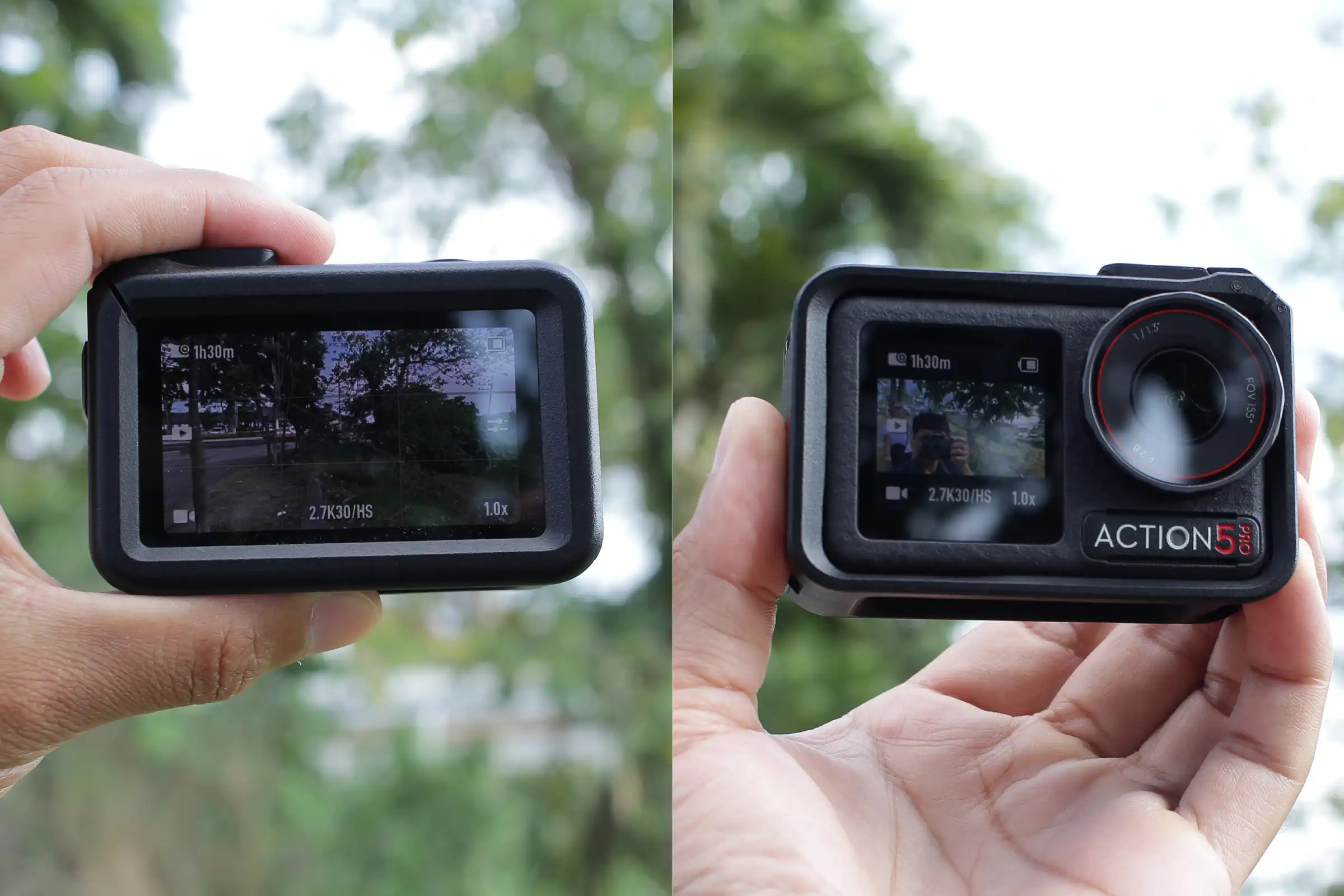
The body measures 70.5 by 44.2 by 32.8 mm and weighs 146 grams, compact enough to slip into a shorts pocket but dense enough in the hand to feel purposeful. Both the 1.46-inch front screen and the 2.5-inch rear touchscreen are readable under bright outdoor light, which is not a small thing when you are shooting on a beach at midday. The front display in particular is what makes self-shooting and framing confirmation practical without guesswork. Three microphones are built into the body, and the buttons have enough resistance to register cleanly even when your hands are wet. On more than one occasion coming out of the water in Panglao, that tactile feedback was exactly what made stopping a recording feel reliable rather than uncertain.
The native 20-meter waterproof rating requires no additional housing. This sounds straightforward until you have actually lived with an action camera that needed a case, checked the seals before every session, and held your breath every time it went under. With the Osmo Action 5 Pro, that anxiety is simply gone. The camera went into the water across multiple sessions in two different locations and came out performing exactly as it did on land. The 64 GB of built-in storage also means you are not immediately dependent on a memory card to start shooting, which removes one more potential failure point before a session.
The glass lens cover is the one part of the build that needs ongoing attention. It scratches if left loose in a bag, and scratches affect footage. A lens cloth and a small pouch are worth adding to your kit from day one.
Key Features That Hold Up Outside the Spec Sheet
The 1/1.3-inch CMOS sensor is notably large for an action camera at this size, and it contributes directly to footage quality in situations where light is not cooperating. At a 60th birthday celebration held indoors, the camera produced footage with real color and usable shadow detail in party lighting that would have pushed a smaller-sensor camera into visible noise. That result was not expected going in. Indoor event footage from an action camera often looks flat and grainy in the darker corners of the room. The Osmo Action 5 Pro's SuperNight mode, a dedicated low-light recording mode available at up to 4K resolution, held up well enough that the footage was genuinely usable alongside clips shot on other cameras that evening.
RockSteady 3.0 stabilization is the other feature that earns its place. On an ATV ride across uneven volcanic terrain, the footage was stable enough to watch without discomfort, which is a higher bar than it sounds when the ride itself involves constant jarring and direction changes. Jogging footage held similar composure. HorizonSteady mode, which locks the horizon level through a full 360-degree roll, is available at up to 2.7K resolution, and HorizonBalancing extends that correction up to 4K for less extreme movement. For everyday outdoor use, RockSteady 3.0 handles the job without requiring any mode selection from the shooter.
The 155-degree field of view at f/2.8 captures wide environmental context naturally, which suits travel and outdoor shooting well. Maximum video bitrate reaches 120 Mbps, and the camera records in MP4 with HEVC encoding. Battery capacity sits at 1950 mAh, rated at up to 240 minutes under controlled conditions recording 1080p with stabilization on. For longer travel days or full-day events, a spare battery is worth carrying regardless of that figure, since real-world use across mixed recording modes will land shorter.
Performance in Actual Shooting Conditions
Underwater in Panglao
The footage from Panglao is where the camera delivered most clearly beyond what was expected. Without any housing, the camera was brought into the water alongside snorkeling and casual swimming sessions at Balicasag Island. Color retention at shallow depths was noticeably clean, and at the surface and just below it, where light shifts quickly and color casts can run blue or green depending on the angle, the footage stayed balanced enough to use without heavy correction. The 20-meter native waterproof rating gave enough confidence to go in without hesitation and stay focused on the shot rather than the camera's survival.
The waterproofing held across repeated sessions without any signs of moisture ingress. No fogging, no seal warnings, no behavior changes after the sessions ended. For underwater shooting at recreational swimming and snorkeling depths, the native rating is more than sufficient and removes a real barrier to getting the shot.

ATV and Outdoor Terrain
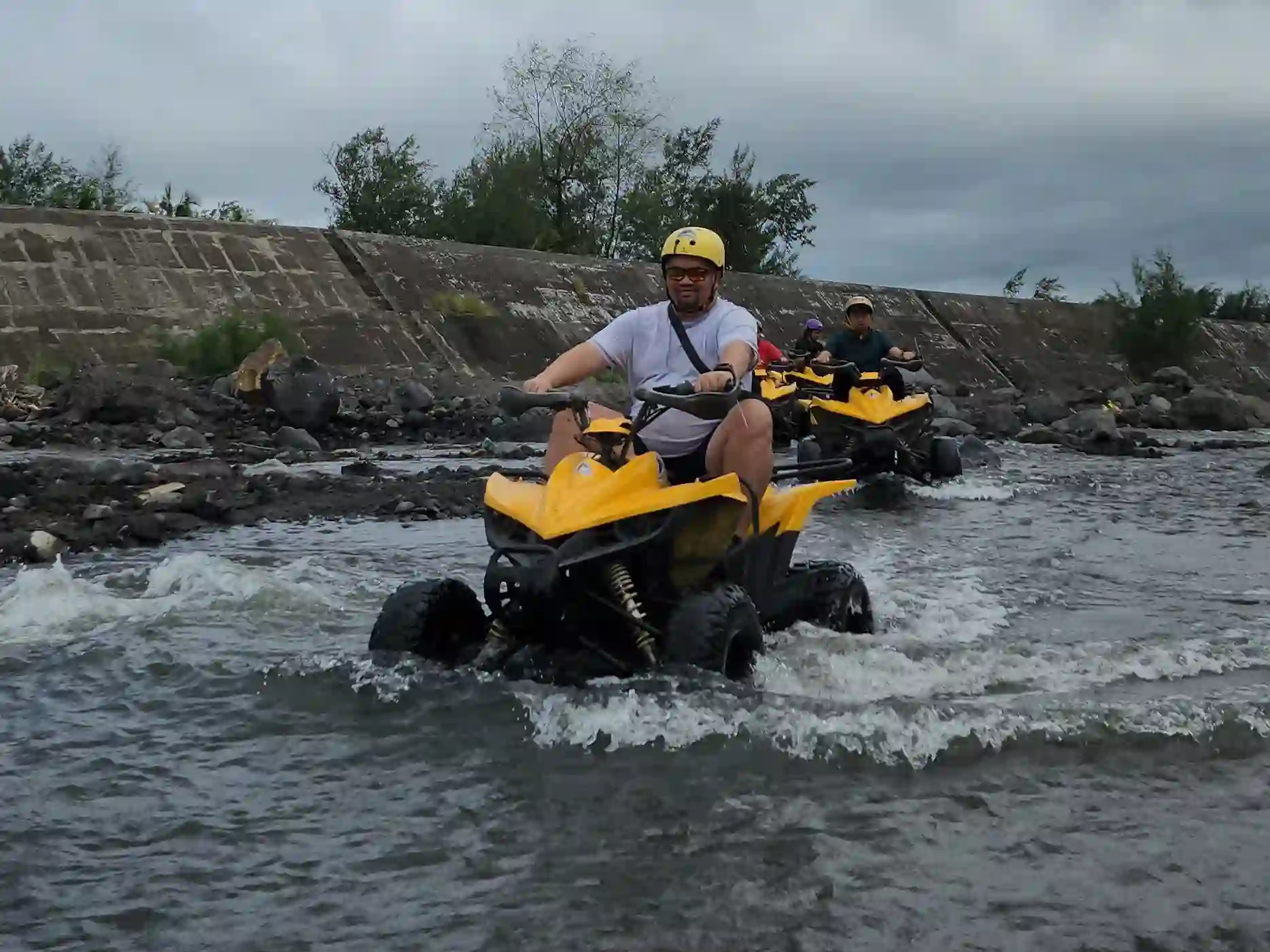
On an ATV ride across the hardened lava fields near Mayon Volcano, the footage held together across the full run. The ground is uneven, the ride is fast, and the camera was mounted without any additional dampening. RockSteady 3.0 absorbed the vibration consistently enough that the resulting clips were usable without any post-stabilization applied. The same performance carried over to trail jogging, where foot-strike rhythm creates its own pattern of shake that cheaper stabilization tends to amplify rather than smooth.
Indoor Event Coverage
The 60th birthday celebration was not a planned test. The camera was simply brought along to capture coverage alongside other gear, without any specific expectation that the footage would be the primary record of the evening. What came back from that session was noticeably better than anticipated. The 1/1.3-inch sensor's ability to gather light in mixed party conditions kept skin tones natural rather than orange-shifted, and the wide 155-degree field of view made crowded room coverage practical without needing to step back constantly. SuperNight mode handled the heavier low-light moments without the footage falling apart in the shadows.
For casual event use where you want a second camera running or a camera that a non-photographer guest can use without instruction, the Osmo Action 5 Pro handles that role with very little setup required.

What the DJI Osmo Action 5 Pro Does Well
The native 20-meter waterproofing is the clearest strength because it removes friction. Every situation that previously required planning around a housing now just requires bringing the camera. That change in behavior is what makes the Osmo Action 5 Pro genuinely useful rather than just technically capable.
Low-light performance from the 1/1.3-inch sensor is a real differentiator in the action camera category. Indoor events, late afternoon beach sessions, and shaded outdoor environments all benefit from a sensor that gathers light well enough to keep footage usable without dedicated lighting. SuperNight mode extends that capability further for the darkest conditions. The footage from the birthday event alone was enough to validate this for anyone who regularly shoots in mixed light.
RockSteady 3.0 is consistent without requiring mode selection for general use. Travel and outdoor activities produce smooth footage across a range of movement types, from walking and running to vehicle-mounted shooting, without noticeable intervention from the shooter. The 64 GB of built-in storage adds a useful layer of redundancy when a memory card is not on hand.
The dual screen setup is practical rather than gimmicky. Self-shooting becomes faster and more reliable, and the rear 2.5-inch display gives enough information to confirm composition without pulling up a phone app.
Where It Falls Short
The honest answer after several months of varied use is that no significant problem appeared in the field. For the use cases this camera is designed for, it performed without complaint. Battery life in real conditions will run shorter than the rated 240 minutes depending on resolution, stabilization mode, and screen usage. A spare battery for full-day outings is a reasonable precaution rather than a workaround for a flaw.
The fixed f/2.8 aperture and 155-degree wide field of view mean you are working with one focal perspective for everything. Digital zoom is available up to 2x for both photo and video, but the quality trade-off at maximum zoom is visible. For travel, events, and water use, the wide angle works naturally. For subjects at distance or situations where a tighter frame would serve the composition, the limitations become real.
Divers who plan to go beyond 20 meters will need the optional Waterproof Case, which extends protection to 60 meters. That adds cost and brings back some of the housing workflow the native waterproofing removes. For recreational depths, the case is not necessary.
Who Should Buy the DJI Osmo Action 5 Pro
This camera is built for the casual shooter who wants reliable coverage without the overhead of managing a complex kit. If your goal is to capture travel memories, document outdoor activities, shoot in and around water, and cover the occasional event or family gathering without carrying specialized gear for each situation, the Osmo Action 5 Pro covers all of that with one body and no accessories required beyond a spare battery.
It is also a strong secondary camera for photographers who primarily shoot stills and want a capable video option for situations where their main body cannot follow. ATV rides, underwater sessions, and crowded event rooms are exactly the conditions where a mirrorless body stays in the bag and the DJI Osmo Action 5 Pro earns its place in the kit.
Shooters who need professional video quality, deep manual control, or interchangeable lenses will find it limiting. It is not trying to be that camera. For everything else, it is one of the most genuinely usable action cameras available to travel and adventure shooters right now.
The Verdict
The DJI Osmo Action 5 Pro does not ask much from the person using it. Bring it, point it, and it handles the rest across a wider range of conditions than most cameras its size. The native 20-meter waterproofing removes the biggest barrier to using an action camera freely, the 1/1.3-inch sensor produces footage that holds up in low light far better than the form factor suggests, and RockSteady 3.0 keeps results usable across everything from trail runs to rough vehicle rides.
For casual shooters who want one camera that covers travel, water, outdoor activity, and events without a second thought, the Osmo Action 5 Pro is as close to a reliable all-condition companion as the action camera category currently offers. It earned that description across real use, not controlled conditions, and that is the only test that matters.
FAQs
The Standard Combo is priced at around PHP 22,190, while the Adventure Combo runs at around PHP 27,990. These figures reflect launch pricing from DJI official Shopee store and authorized local retailers. It is worth checking current listings directly as prices can shift with promotions and bundle changes.
The standard unit includes the camera body, a basic set of mounts, and a single battery. The Adventure Combo adds extra batteries, a charging hub, and additional mounting accessories. The camera hardware itself is identical between both packages.
The DJI Osmo Action 5 Pro was released in September 2024.
It uses a 1/1.3-inch CMOS sensor with a 155-degree FOV at f/2.8, shoots up to 4K at 120fps, records at 120 Mbps max bitrate, and is waterproof to 20 meters natively. It includes RockSteady 3.0, HorizonSteady, dual OLED touchscreens, three built-in microphones, 64 GB internal storage, and a 1950 mAh battery rated at up to 240 minutes.
A spare battery is the most practical first accessory. A V30-rated microSD card is recommended beyond the built-in 64 GB(47 GB usable). A protective lens pouch guards against scratches. For dives past 20 meters the optional DJI Waterproof Case extends protection to 60 meters.
Yes. The Osmo Action 5 Pro carries a native 20-meter waterproof rating with no additional housing required. The battery compartment and USB-C port covers must be properly closed before water entry. For depths beyond 20 meters the optional Waterproof Case is needed.