
Hon. Ester S. Marasigan Marks Her 60th Birthday Celebration in Tagaytay with Performances, Tributes, and a Full Room
On the evening of October 27, 2024, Barangay Captain Hon. Ester S. Marasigan of Crossing Mendez West, Tagaytay City, turned 60 at Trabiesa, a venue nestled in the elevated terrain of Tagaytay City, Cavite. What gathered in that room was not simply a guest list. It was a cross-section of her public and personal life: city officials, longtime friends, family from across the country, and community members whose connection to her predates the title on her nameplate.
The celebration arrived weeks after Typhoon Kristine moved through the region. The planning held. The program ran. The people showed up. That alone was its own quiet statement about the kind of leader the evening was built around.

An Opening That Set the Register
Vice Mayor Agnes Tolentino of Tagaytay City delivered the opening message, followed by a slideshow that moved through three decades of photographs. The room responded the way family slideshows tend to produce: a specific stillness that no emcee instruction could manufacture.
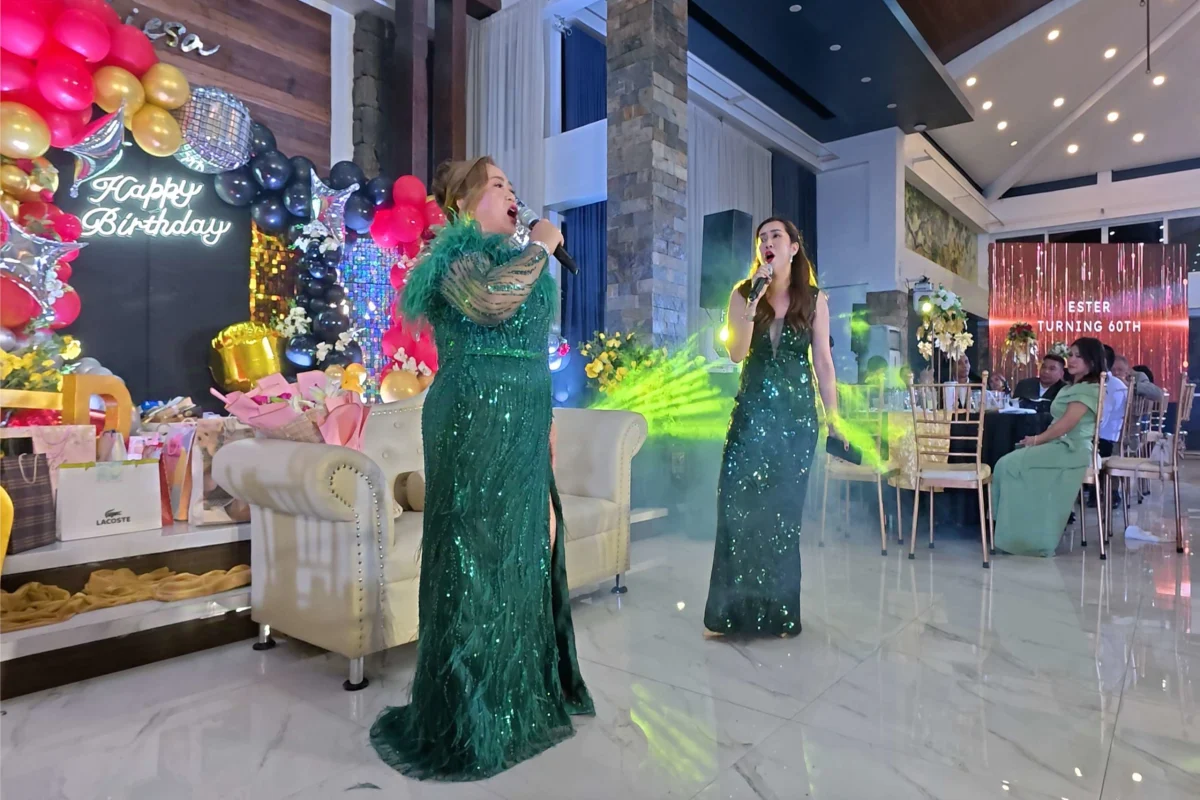
The program's register shifted the moment Hon. Marasigan descended the stairs in an olive green gown and performed a rendition of "Blue Bayou." The crowd had been watching a reception. After that entrance, it understood it was watching a show. Her husband, a former Barangay Captain himself, followed with a personal message that grounded the evening in something longer than one milestone.

Three Gowns, Three Resets
Hon. Marasigan appeared three times across the night, each in a different gown, each resetting the room's energy in a deliberate sequence.
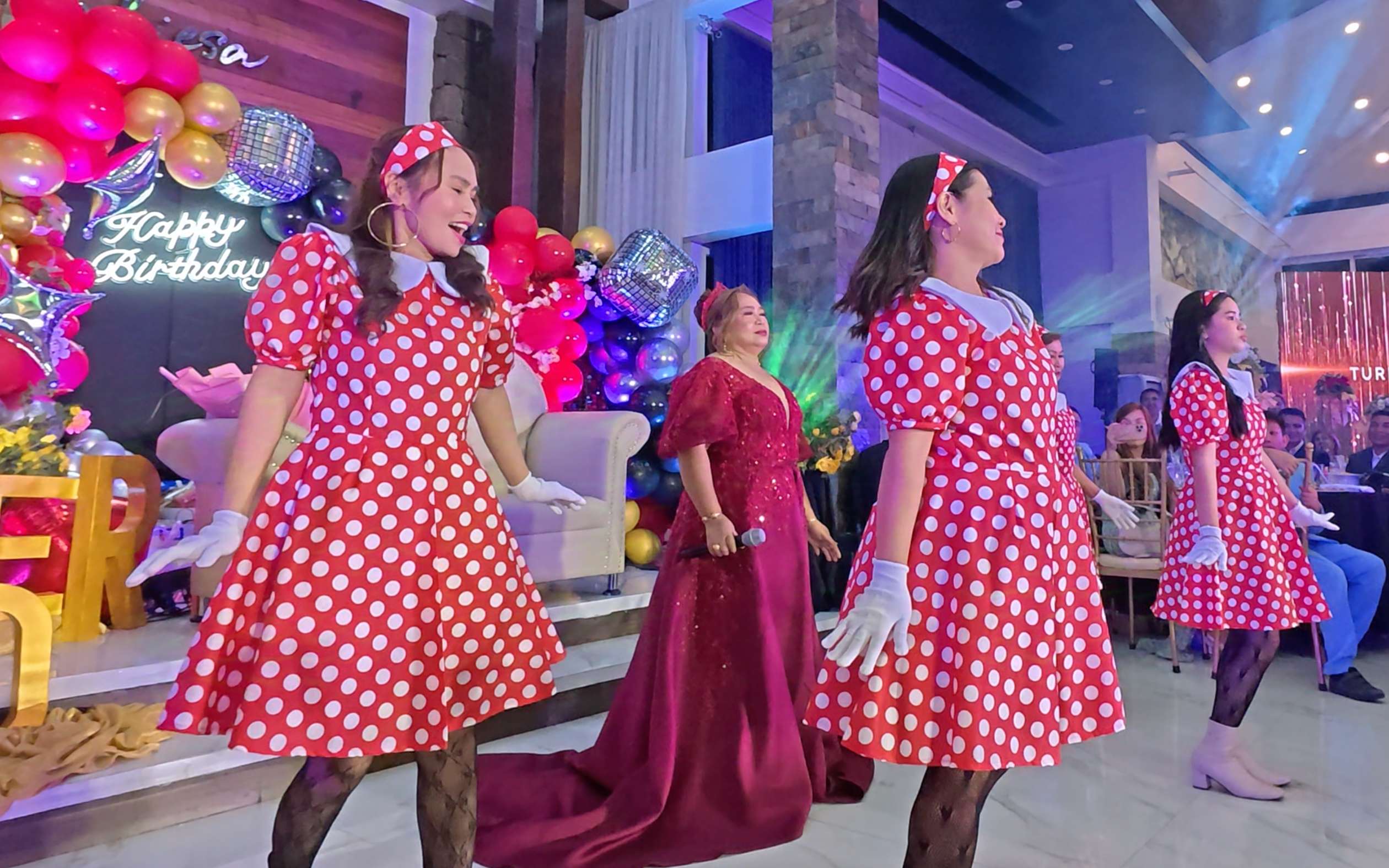
The olive green entrance carried the formal weight of the program's opening. The second appearance arrived in maroon, paired with a performance of "Kiss Me, Kiss Me" by Sarah Geronimo, backed by her sisters and nieces. The choreography was family, not production, and the room responded accordingly. The third change, into an emerald gown, signaled the evening's final phase: an open dance floor and the shift from program to celebration.
Each wardrobe change also functioned as a structural marker — the night did not drift; it moved in chapters.
The Twelve Treasures Segment
The twelve treasures segment placed family members one by one at the front of the room, each presenting a gift paired with a spoken message. On paper, the sequence reads as ceremonial. In practice, by the third or fourth presenter, the audience had stopped watching a program and started listening to people who had known the celebrant long enough to have something specific to say.
The gifts themselves — twelve perfumes, twelve wines, twelve bags, twelve bills, and a symbolic dance involving ten roses — accumulated into a portrait of a life with layers: the public servant, the sister, the mother, the friend. No single item carried the meaning alone.

Games and the Room at Its Loosest
The games portion of the program produced the evening's most unguarded moments. A Rock Paper Scissors round among barangay officials and family friends generated the kind of unselfconscious expression that formal segments rarely allow. Family Feud organized the room into teams and brought out a different register entirely. A third game, Guess the Celebrant's Expressions, drew on the crowd's actual knowledge of Hon. Marasigan's habits and personality - a format that only works when the room genuinely knows the subject.
Prizes included Starbucks vouchers and car service discounts from MMEM Auto Care Services. The practical nature of the rewards fit the tone of the crowd.

A Duet That Closed the Formal Program
Among the evening's most recalled moments was a duet between Hon. Marasigan and her daughter, performing "I Can" by Regine Velasquez. The song choice carried specific weight in the context of the night: a piece associated with determination and clarity, sung between a mother and daughter in front of officials, friends, and family. The room went quiet in a way distinct from the slideshow silence. That kind of attention is not produced by a program note. It arrives on its own.
What the Evening Represented
The 60th birthday celebration in Tagaytay was a gathering that held two things at once: a personal milestone for a woman who has spent her public years in barangay service, and a community moment that arrived in the aftermath of a regional weather event. The people in the room were not there out of obligation to an occasion. The length of the speeches, the specificity of the tributes, and the fullness of the guest list all pointed toward something accumulated over time - the kind of regard that barangay work, done consistently, can produce.
Trabiesa held the night without calling attention to itself. The ambient warmth of the venue, the program that moved without rushing, and the crowd that stayed through the dance floor portion of the evening. All of it reflected the subject at the center. Some 60th birthdays mark the passage of a number. This one documented a relationship between a person and the community she has spent years serving.