

Most people come to Barangay Lanca, Mati City, Davao Oriental for the beach. They set up camp along the shore, spend the night, and leave the way they came. Not many continue along the coastal road toward Cabuaya. The ones who do find something that does not appear on most itineraries: a cliffside pullout with a direct line of sight across the Pacific, a roadside shrine to the Immaculate Conception, and a standing white cross rooted in a pile of painted rocks just a short walk further up.
This is not a developed viewpoint. There is no entrance gate, no parking attendant, no signage directing you here. The road itself is concrete now, which is a relatively recent change, and the view opens suddenly as you round a bend and the hillside drops away on the ocean side. What you see from the edge is the kind of scene that takes a moment to process: turquoise water, a rocky shoreline laced with white surf, and green mountains pressing close to the coast in both directions.
The visit costs nothing. Getting there takes almost no effort if you are already in Lanca. And yet it carries a quiet weight that a flat beach cannot quite replicate, partly because of the height, partly because of the shrine, and partly because the Pacific looks genuinely vast from up there.
What the Lanca Pacific View Deck Looks Like When You Arrive
The first thing that registers is how exposed the spot is. There are no fences at the cliff edge. The ground is gravel and loose rock, and the drop is immediate. Wind moves through steadily, and at eight in the morning the sun was still low enough that it did not press down. The light was soft, the kind that fills the scene without burning it out, and the water below held a deep turquoise that shifted darker further from shore.
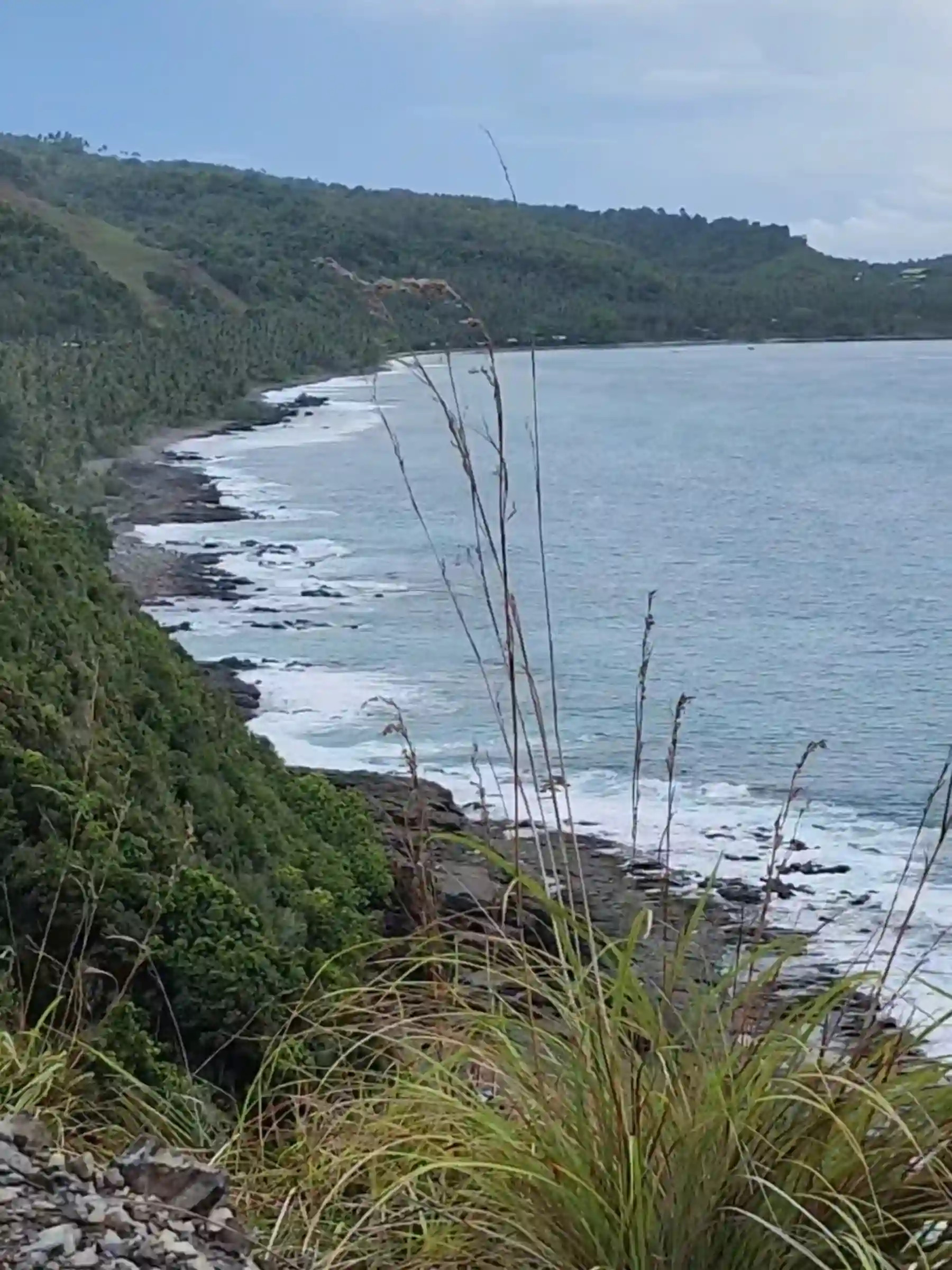
Looking out from the roadside, the coastline curves in both directions. Rocky outcroppings interrupt the surf line at regular intervals, and white water breaks and reforms around them before washing up the dark shore. The mountains behind the coast are dense with trees, their slopes meeting the water with almost no flat ground between. A concrete road traces the base of the cliff, and from above it reads as a thin grey line pressed between rock and sea.
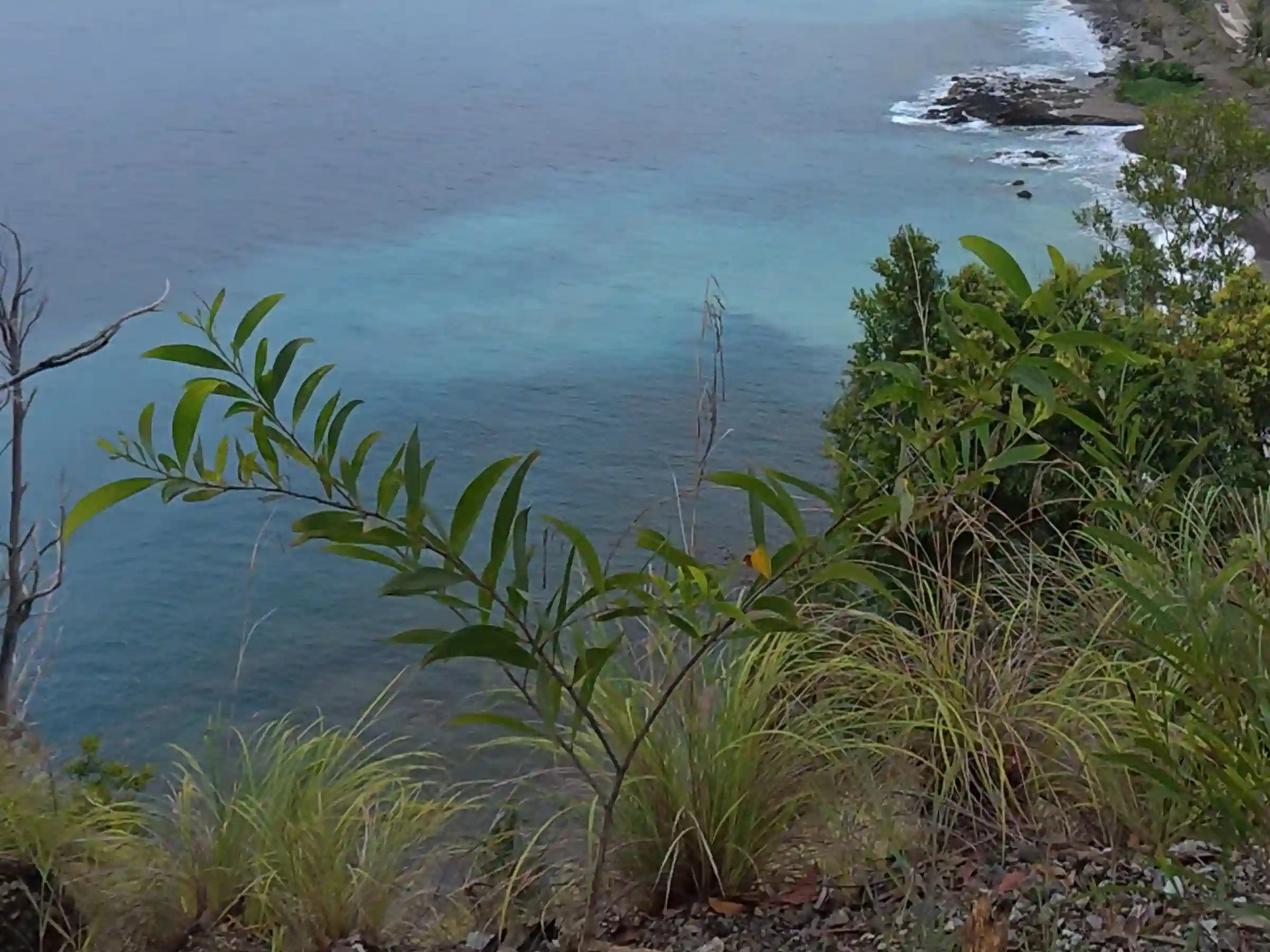
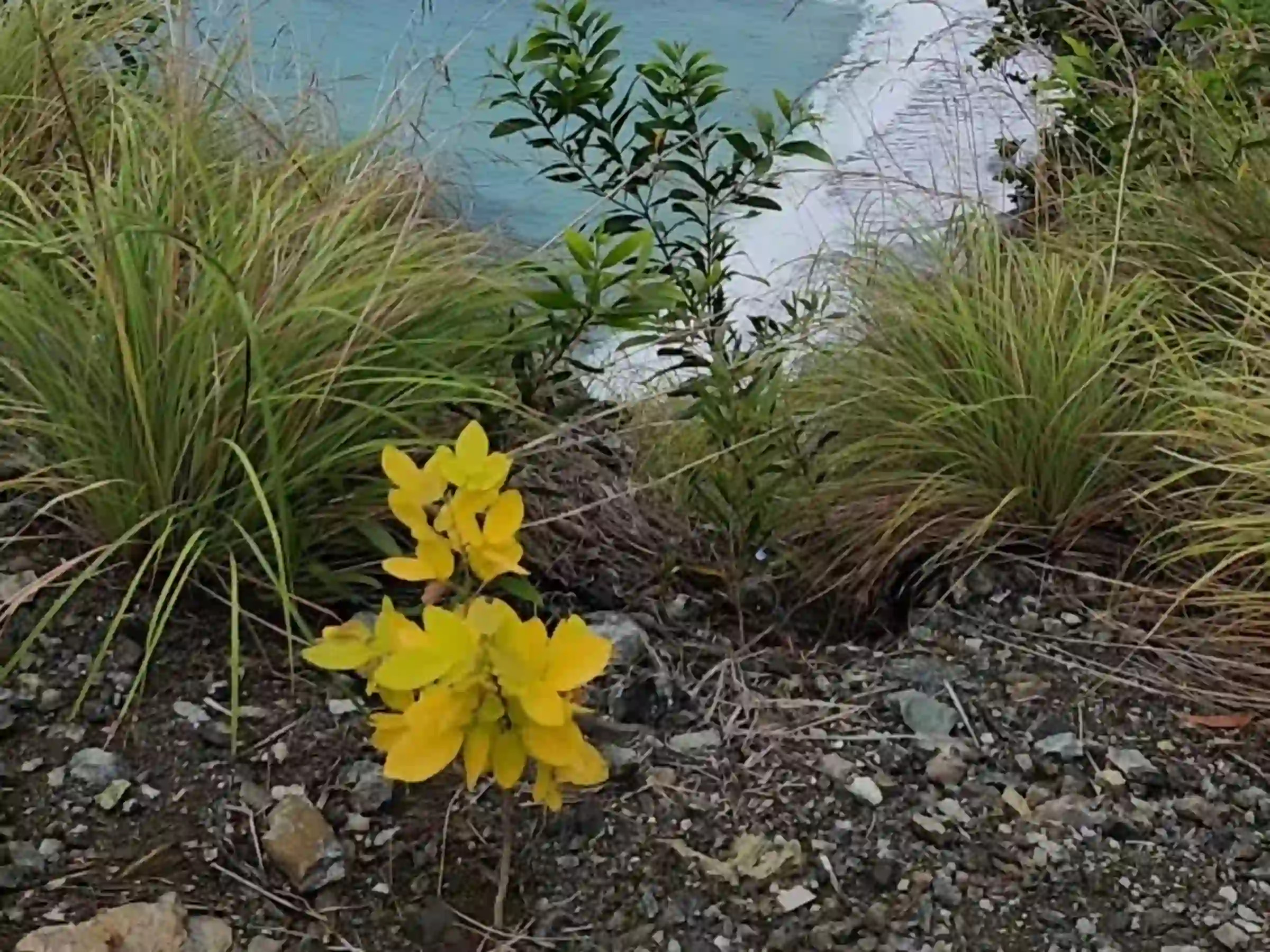
The vegetation at the edge is low and scattered. Tall grasses grow between the gravel, and a few shrubs push out toward the view. Yellow flowers were blooming at the base of one of these shrubs on the morning of the visit, a small detail that read clearly against the grey rock and blue water beyond. From different angles along the edge, overhanging tree branches frame the coastline, breaking the wide panorama into something more composed.
The Immaculate Conception Shrine and the White Cross at Lanca
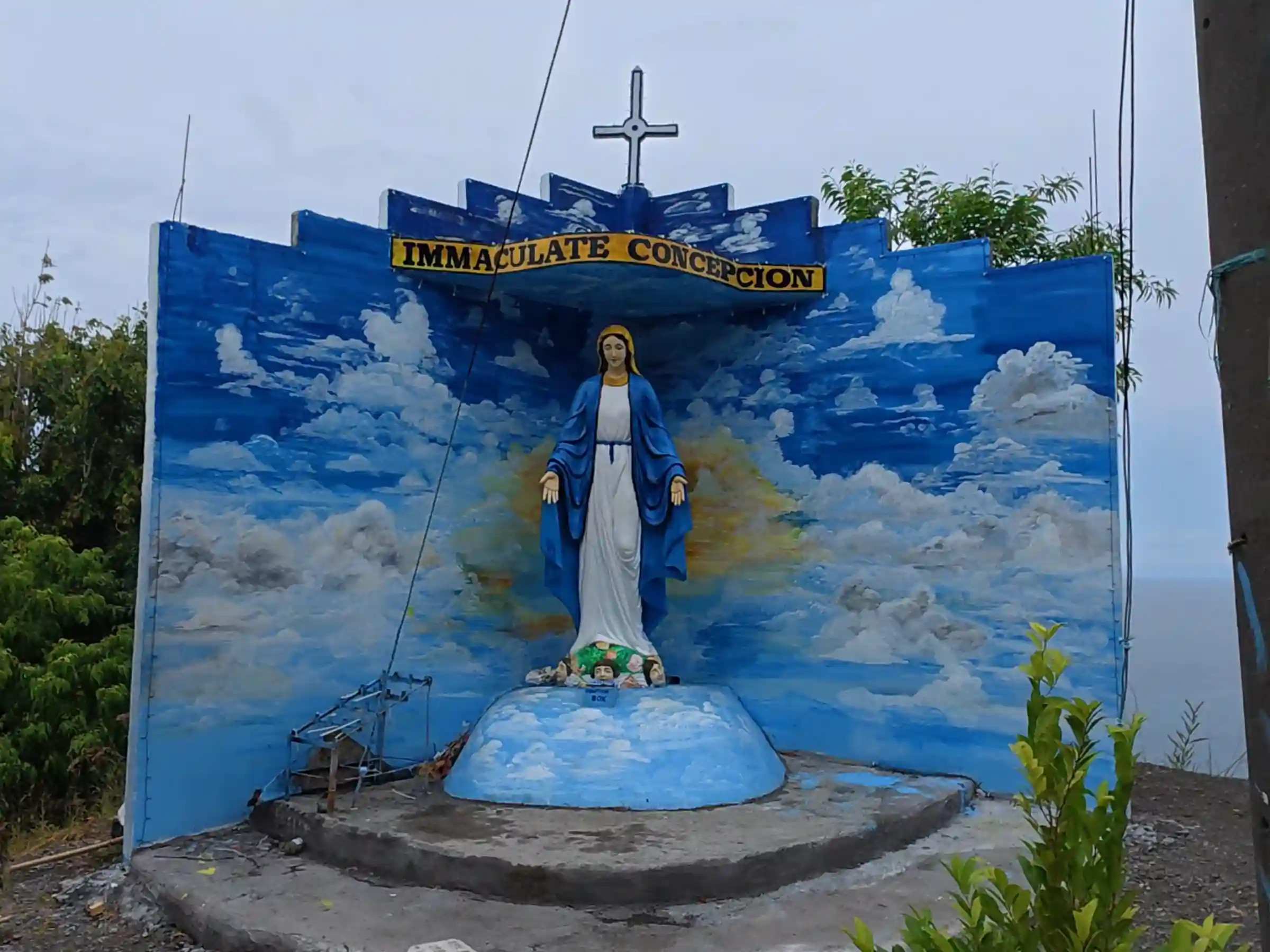
Set back slightly from the cliff edge, facing the road, is a painted concrete structure housing a figure of the Immaculate Conception. The backdrop is a hand painted sky: deep blue, layered with clouds, with a burst of gold and yellow behind the figure. The banner across the top reads IMMACULATE CONCEPCION in bold yellow letters on a dark field. A small metal cross rises above the arch of the backdrop, and the base of the figure rests on a pale blue dome painted to suggest the earth.
The shrine sits in the open, accessible to anyone passing along the road. It is modest in scale but clearly maintained, and the painting is detailed enough that the clouds have depth and the light behind the figure reads as intentional rather than decorative. For travelers who are religious, this is a meaningful stop. For those who are not, it is still a specific and unusual thing to find at the edge of a Pacific cliff on a coastal road in Davao Oriental.
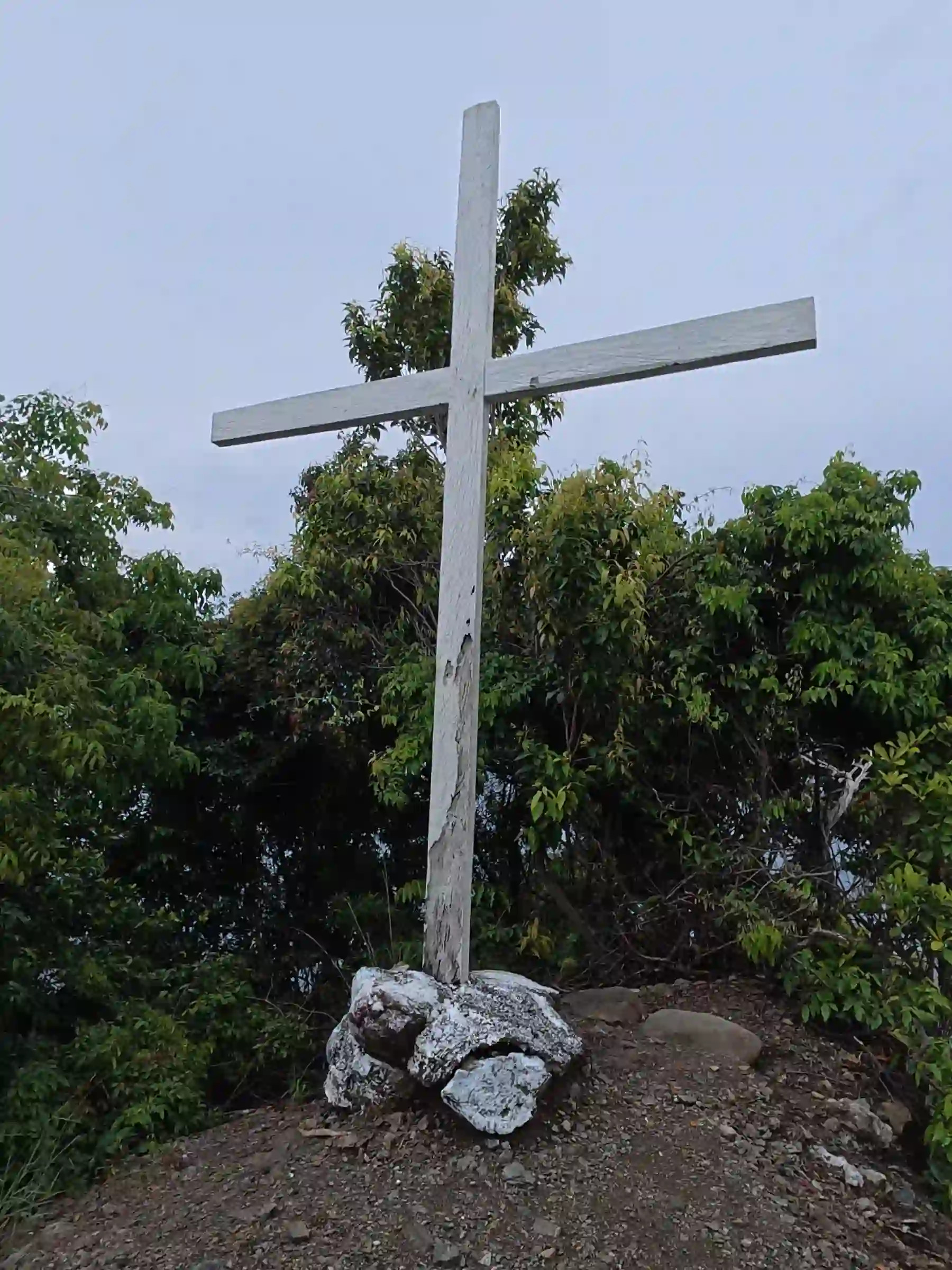
A short distance from the shrine, slightly higher on the hill, a white wooden cross stands planted in a cluster of whitewashed rocks. It is tall and plainly made, weathered in a way that suggests it has been there for some time. Trees grow close behind it, their green pressing against the white of the cross and against the pale grey sky that morning. The ground around the base is bare dirt and scattered stones, and the cross casts no elaborate shadow. It simply stands there, visible against the hill, readable from the road below.
What the Pacific Looks Like from Different Angles at This Spot
The view changes depending on where you stand along the edge. From one position, the rocky shore below is the foreground and the mountains form the background, with the sea filling the middle distance in a wide band of blue and green. From another angle, the coastline curves more dramatically, and the road at the base of the cliff leads the eye toward a distant headland. The color of the water shifted noticeably as the morning light moved, and the turquoise near shore was distinctly different from the grey blue of the deeper water further out.
The wind was steady throughout the visit. Not strong enough to be a problem, but present enough to be felt, moving through the grass at the edge and across the open ground between the shrine and the cliff. The air was clean and the morning felt genuinely refreshing, a different quality from the heat that would likely build later in the day. There was no shade at the viewpoint itself, which matters if you arrive after the sun has climbed.
Shooting the Lanca Pacific View Deck: Notes for Photographers
The light at eight in the morning was favorable. The sun was not yet high enough to flatten the color out of the water, and the overcast sky softened the highlights without removing the turquoise entirely. The cloud cover that morning gave the scene a certain weight, a moodier reading than a clear blue sky would have produced, and the mountains in the background held their green well in that light.
The overhanging branches at the cliff edge are worth working with deliberately. They create a natural frame that keeps the eye from drifting across a panorama that is almost too wide to compose. The yellow flowers against the grey gravel and blue water also read well as foreground interest. The shrine backdrop, with its hand painted clouds and golden light, is a subject in its own right and works best photographed straight on, close enough that the painted detail is legible.
Drone work is possible here given the open sky above the cliff, though the wind was present enough to factor into flight planning. The aerial perspective reveals the full shape of the coastline, the road at the base of the mountain, and the relationship between the rocky shore and the forest above, all things that are harder to read from ground level.
How to Reach the Lanca Cabuaya Road View Deck in Mati Davao Oriental
Regardless of where you are coming from, the route to this viewpoint passes through Governor Generoso Road. This is not an optional detour; it is the required passage. From the Manikling Public Terminal in San Isidro, Davao Oriental, take the direction going right toward Governor Generoso, and continue along that road until it connects to the coastal stretch leading to Barangay Lanca, Mati City. The ride from San Isidro takes roughly two and a half to three hours by motorcycle. By car the time would likely be shorter, though the exact difference depends on road conditions along the way.
If you are already at Lanca Shoreline and coming from the coast, the viewpoint is a straightforward thirty minute ride by motorcycle. You follow the road along the shore and the pullout appears as the road climbs the hillside. There is no formal marker, but the shrine and the view are visible enough from the road that you will recognize it when you reach it. The coastal road is now concrete, which makes the ride more manageable than it would have been when the surface was still unpaved.
There is no entrance fee. The viewpoint is open road, open ground, and open to anyone passing through. There are currently no vendors selling food or drinks at the spot, which is something worth planning for before you arrive. There are also no toilets and no shade structure, and the edges of the cliff have no fencing of any kind. Traveling with children requires careful attention at this spot.
What to Bring and What to Expect
Pack your own water, juice, or fruit before leaving Lanca or your last stop before the viewpoint. There is nothing available to buy at the deck itself. Bread and easy snacks travel well and will make the stop more comfortable, particularly if you plan to stay long enough to shoot the scene properly.
Arriving by eight in the morning, as this visit did, puts you there before the sun is high enough to be uncomfortable and before the light flattens. The morning was calm enough to feel refreshing rather than hot, and the wind helped. Later in the day, with no shade and the sun overhead, the experience would likely be quite different.
Footwear with grip matters. The ground is loose gravel and dry rock, and the edge is abrupt. There are no guardrails and no barriers between the viewpoint and the cliff.
Whether the Lanca Pacific View Deck Is Worth the Stop
For anyone already in Barangay Lanca, Mati City, Davao Oriental, this is an easy thirty minutes from the shore and costs nothing to visit. The view of the Pacific from this height is genuinely different from what you see at beach level: wider, quieter, and more exposed in a way that makes the scale of the coastline legible. The presence of the Immaculate Conception shrine and the white cross adds a layer that is specific to this place, something that photographers and travelers interested in how faith and landscape exist alongside each other in Mindanao will find worth documenting.
It is not a place to linger for hours. There is no infrastructure, no food, and no shade. But as a stop along a coastal road that most people do not take, it rewards the detour. Come early, bring your own provisions, and keep a close eye on anyone in your group who might wander toward the unfenced edge.
For those planning a fuller visit to this part of Davao Oriental, the Lanca Shoreline campsite in Mati City serves as a natural starting point before making the ride up the Cabuaya Road. The two stops together cover both the water level and the view from above, which is a more complete read of what this stretch of the Pacific coastline actually looks like.
FAQs
The Pacific View Deck sits along the Lanca Cabuaya Road in Barangay Lanca, Mati City, Davao Oriental. It is a roadside cliffside pullout, not a developed attraction, and it opens up suddenly as the road climbs a hillside and the ocean side drops away. A painted shrine of the Immaculate Conception and a white wooden cross on the hill above mark the spot.
The route to the viewpoint requires passing through Governor Generoso Road regardless of your starting point in Mati City. From the Manikling Public Terminal in San Isidro, Davao Oriental, the ride takes roughly two and a half to three hours by motorcycle. If you are already at Lanca Shoreline, the viewpoint is about 30 minutes up the coastal road from the shore. The road is now concrete, which makes the ride more manageable than it used to be.
There is no entrance fee. The viewpoint is an open roadside pullout with no gate, no attendant, and no signage. There are also no vendors, no toilets, no shade structure, and no fencing along the cliff edge, so bring your own water and food before heading up and keep a close eye on children near the unfenced drop.
The main activity is taking in the Pacific Ocean panorama from an elevated cliffside, where turquoise nearshore water contrasts with the deeper blue further out and the surf line breaks consistently against a rocky shore below. The Immaculate Conception shrine and the weathered white cross above it are subjects worth photographing in their own right. Drone flying is also possible given the open sky above the cliff, though wind conditions factor in.
Arriving by 8 in the morning puts you there before the sun climbs high enough to flatten the color out of the water and before the exposed cliff becomes uncomfortable. There is no shade at the viewpoint at all, so late morning and afternoon visits are noticeably hotter. Overcast mornings produce a moodier, more dramatic read of the coastline than a fully clear sky.
They serve completely different purposes. Dahican is a flat 7 kilometer public beach built for surfing, skimboarding, and easy beach days, and it connects directly to Mati City. Lanca rewards visitors willing to make the longer drive with a quieter shoreline, a cliffside view of the Pacific that beach level simply cannot give you, and a stretch of coastal road that most tourists never take. For raw scenery and solitude, Lanca is the stronger choice.
Lanca Shoreline Campsite is the natural base before riding up the Cabuaya Road, and it sits at water level offering the complementary low angle of the same coastline. Payag ni Jose at Sitio Cotcot, Golden Beach Resort Lanca, Kojō Resorts Lanca, and Costa Pacifica Beach Resort are all along the same corridor and cover a range of budgets from 1,500 to 5,000 pesos per night. Combining the viewpoint with a beach stop at any of these resorts gives you both the elevated Pacific panorama and the shore experience in a single day.