

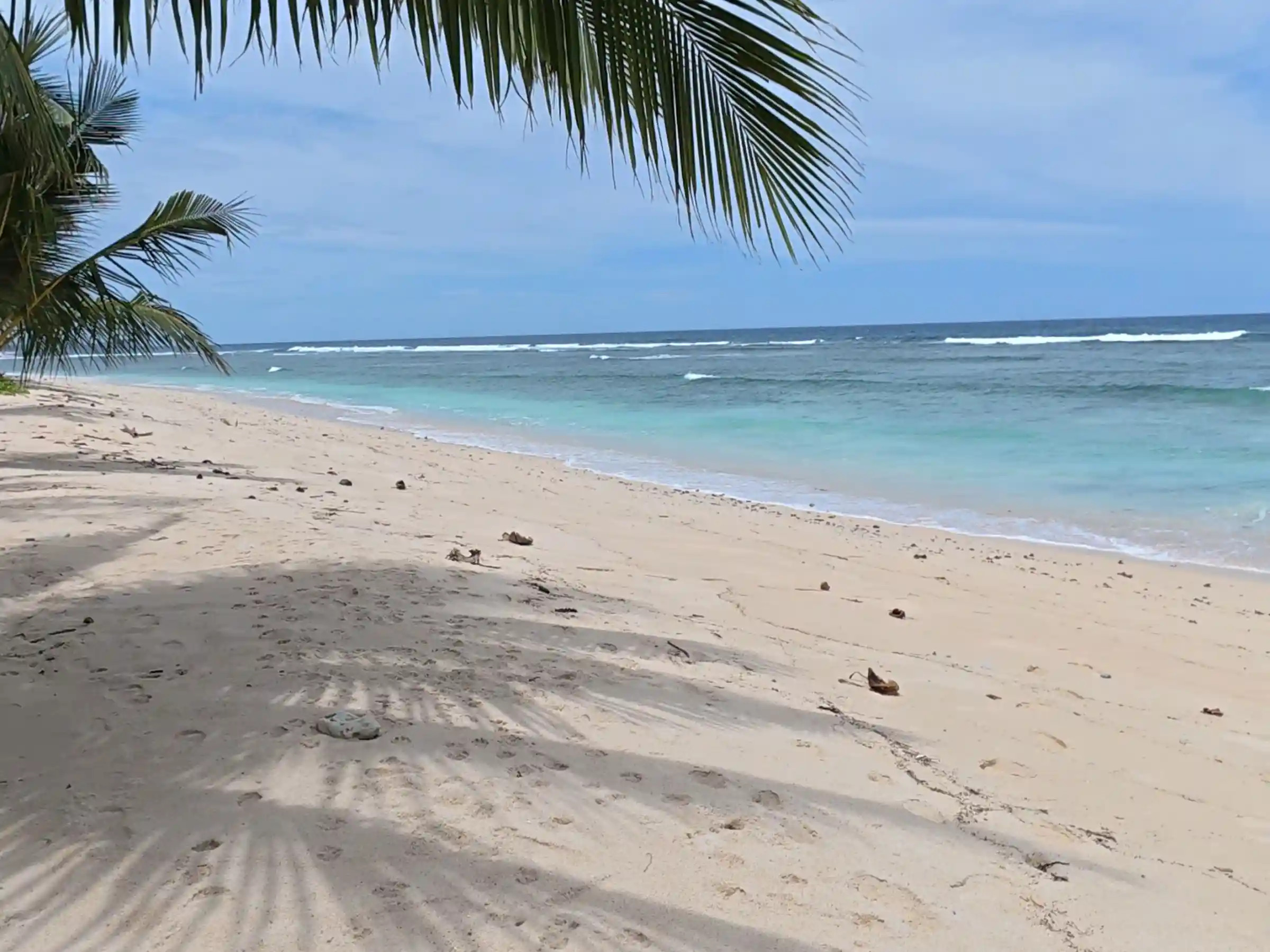
Most beaches in Davao Oriental face calmer water. Lanca does not. Purok 2, Barangay Lanca, Mati City sits on the Pacific side, and the ocean behaves accordingly: medium to large waves arrive in sets, the water holds a blue that shifts with the light, and the sand underfoot is a warm, creamy orange that does not read as white until you are standing on it. The shore itself is wide and unobstructed, no rock clusters breaking the line between water and land, just open beach running in both directions under a row of coconut palms that mark the edge of the camping grounds.
My father and I went there on April 5 to celebrate his birthday. Our friend joined us for the overnight. The plan was not spontaneous, but it did not feel complicated either: one destination, one night, the kind of trip that asks very little of you logistically and gives back a long stretch of open shore and a grill full of charcoal by evening.
The total spend for the three of us, covering transport, fees, food, and accommodation, stayed well under 2,000 pesos. That figure is worth knowing before anything else.
What You See When You Arrive at Lanca Beach in Mati
We left Barangay Maputi in San Isidro, Davao Oriental at around 9 in the morning, two motorcycles moving through the route via Governor Generoso Road. The road is the only way in. It took about two and a half hours to reach Lanca, and aside from asking a few people in the barangay for confirmation once we arrived, there was nothing to navigate around. The route is straightforward.
The beach registered immediately as wider than expected. There is a quality to shorelines that face open Pacific swells: the sand gets worked more thoroughly, the tide lines are broader, and the waves arrive with a different kind of weight than what you find in sheltered bays. At 9 to 10 in the morning, the high tide was still pushing in, and medium to large waves were slamming the sandy shore in a steady rhythm. The water was a clear blue, genuinely so, not the greenish turquoise common to calmer inlets. Against the creamy orange of the sand, the contrast was sharp.
The coconut palms along the camping area lean at angles that keep most of the direct midday sun off the ground beneath them. The shade they throw keeps the site noticeably cooler than a treeless beach would be at that hour.
The Sand, the Shade, and the Shape of the Camping Grounds
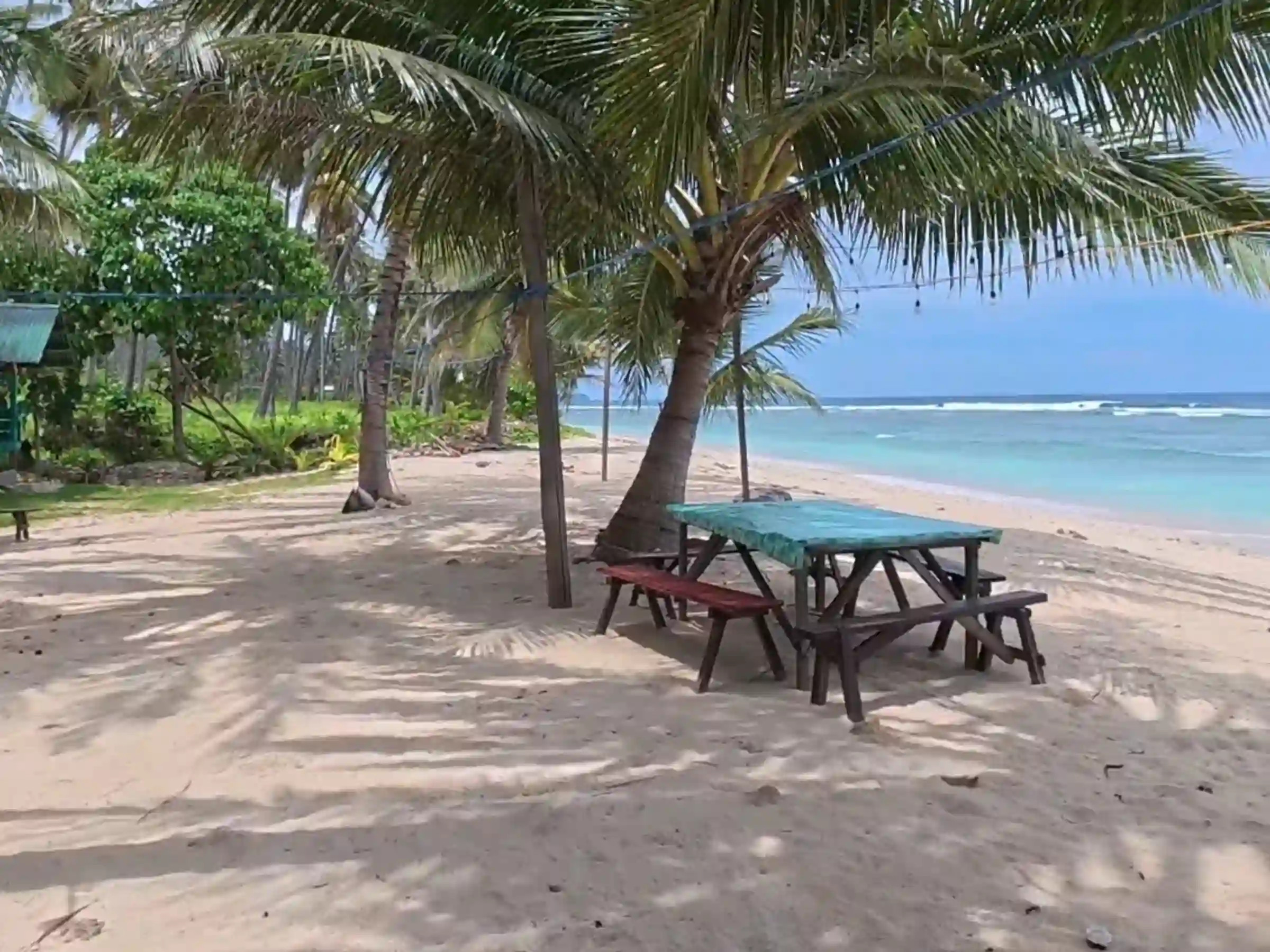
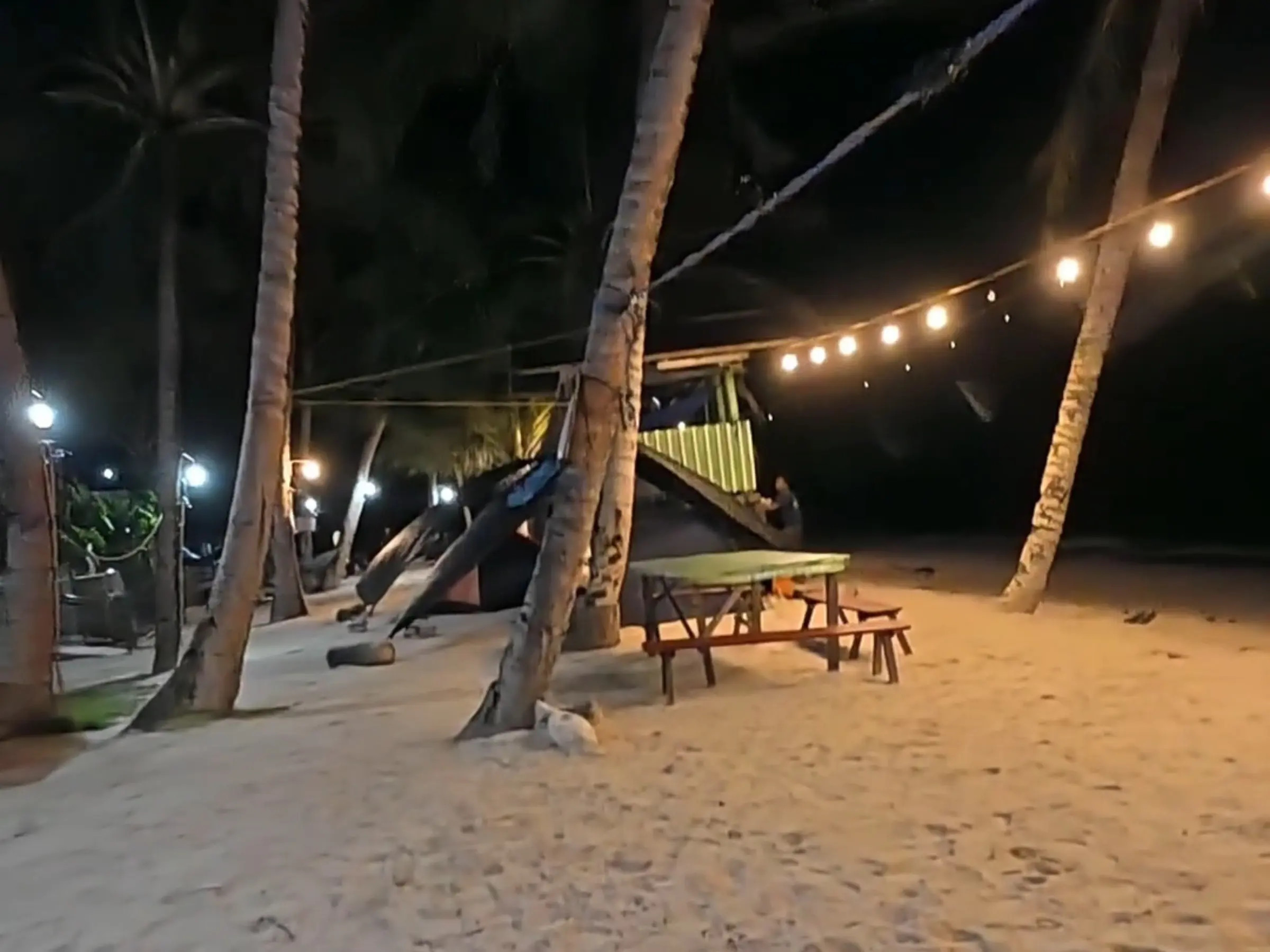
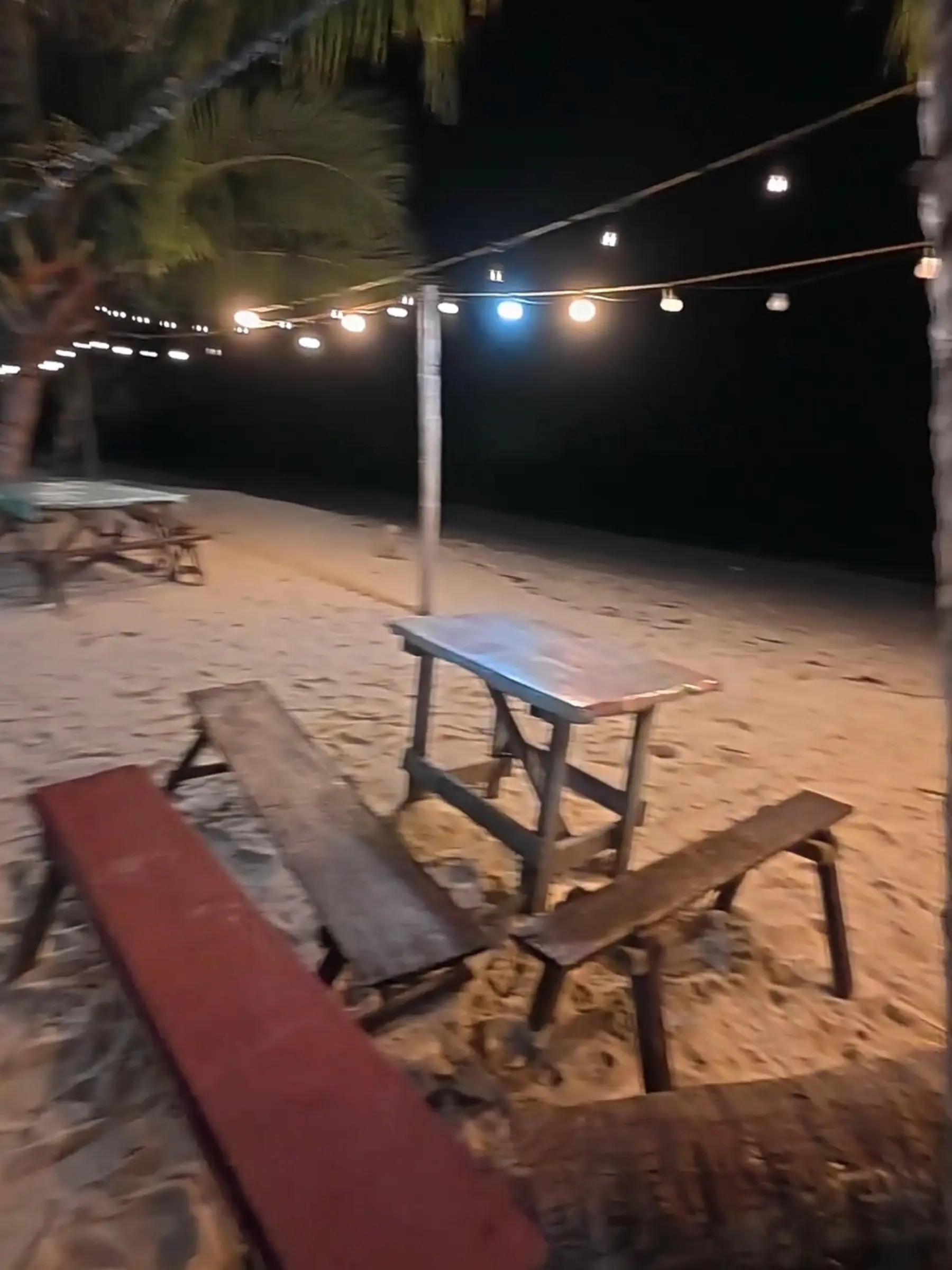
The camping area sits between the tree line and the upper edge of the beach. Picnic tables with painted tops sit directly on the sand under the palms, the kind of tables that get used through the day and double as gathering points at night when the string lights come on. There are grilling stations on the property, concrete structures with iron grates built to hold a full charcoal fire, and a corrugated roof overhead for shade while you cook.
The sand in the camping zone carries the same creamy orange tone as the beach proper. Palm shadows fan out across it during the day in clean, radiating lines that shift as the sun moves. At night, the same ground takes on a warm amber color from the string lights strung between the trunks.
The space between the trees and the waterline is generous. There is room to walk without feeling crowded, room to pitch a tent without it sitting in someone's path, and enough open sand to move between the cooking area and the shore without passing through anyone else's camp.
Grilling Fish and Eating on the Shore
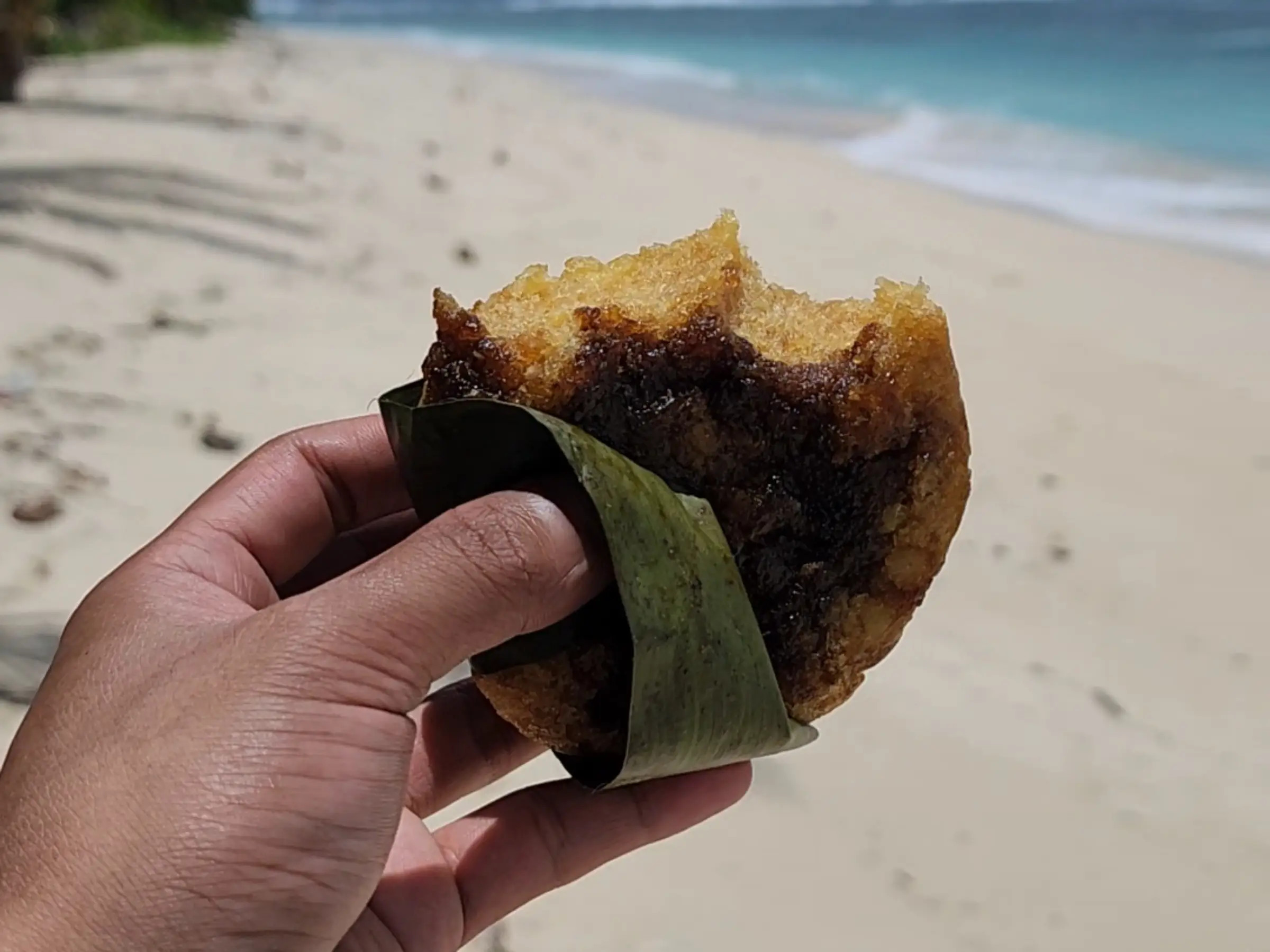
The resort has sari-sari stores on site that sell fish at prices worth stopping for. We brought our own food as well: bread, lechon manok from Tibanban, cooked rice, puto cassava, and packed water. The lechon manok was paired with rice at the beach. The puto cassava, that dense, slightly sweet cassava cake cooked with coconut and muscovado, we ate standing at the shore.
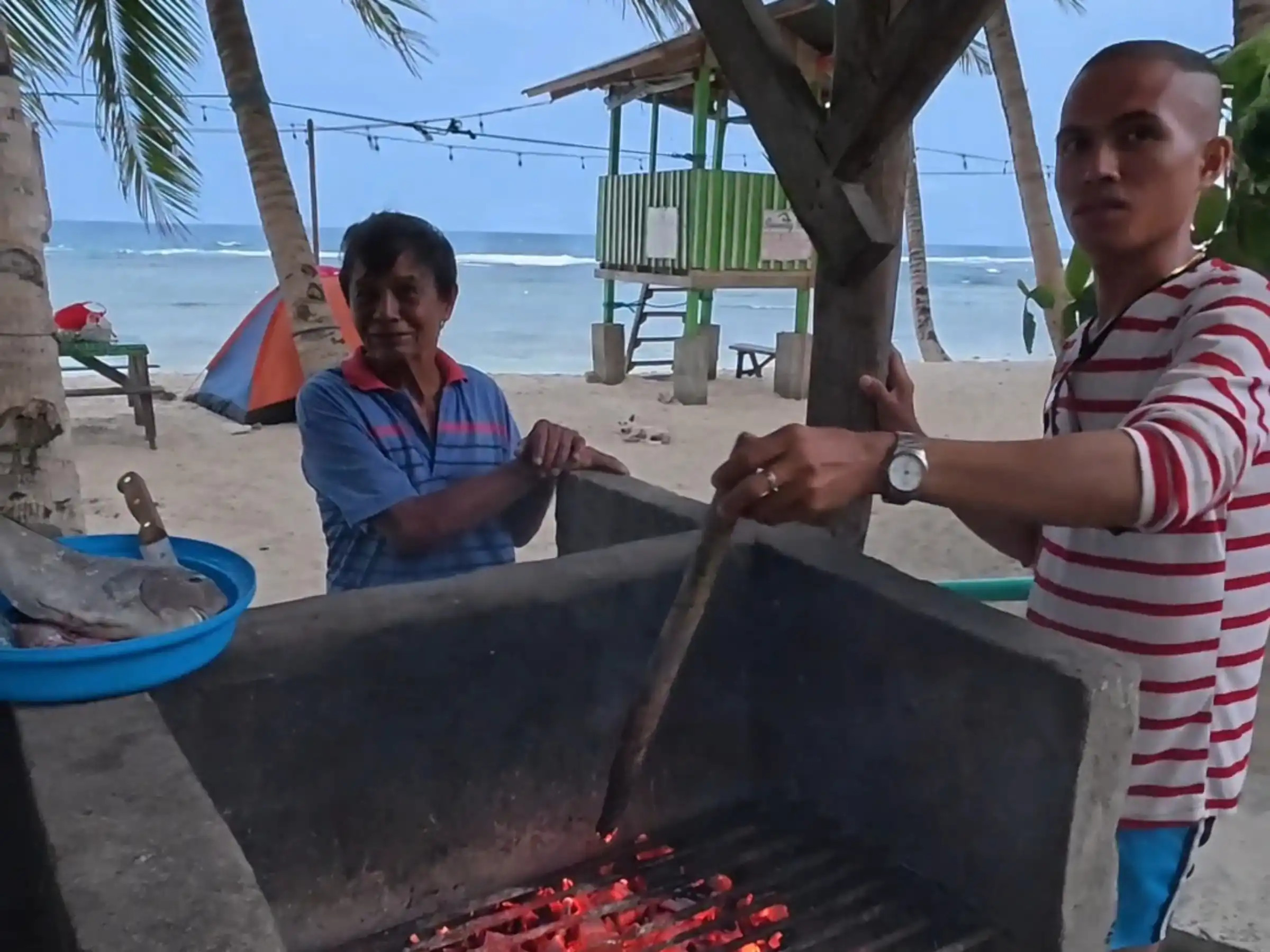
The grilling happened later. We bought fish from the stores on site and brought it to the concrete grill station. Two of us worked the charcoal, one on each side of the grate, turning the coals with a long rod to get the heat even before laying the fish down. The fire was already well established by late afternoon, and the light at that hour was dropping fast enough that the glow of the coals was visible against the air.
Our total food cost across the overnight, including everything we brought and what we bought on site, stayed under 800 to 1,000 pesos for all three of us.
What the Beach Looks Like After Dark
The shift from afternoon to night at Lanca is worth paying attention to. The wide, sun-washed beach narrows in your perception once the light drops, and the string lights strung between the palms take over as the primary visual anchor. They run at roughly head height through the camping zone, warm bulbs spaced evenly along the line, and the effect on the sand below is a soft, even amber that reaches maybe ten meters in each direction.
The picnic tables, which during the day are functional furniture under moving palm shadows, become the social center of the camping grounds after dark. A few tents were pitched nearby during our stay, including one with an orange dome visible in the background of the grill photo. Security personnel are present overnight, which matters on a beach that has no perimeter fencing.
There is no internet signal at Lanca. The resort has a peso-based wifi connection for purchase, and drinking water is available for sale on site.
What to Watch For as a Photographer at Lanca Beach
The most useful window for photography at Lanca is the two hours around high tide, between 9 and 10 in the morning. The water is at its deepest blue in that window, the waves are at their largest, and the creamy orange of the wet sand reads most clearly against the surf. By afternoon, the tide pulls back, the water shifts color, and the open beach grows wider but loses some of its visual contrast.
The palm shadows on the sand in the camping area are worth noting. They fan outward in clean lines that shift slowly through the morning, and at certain angles they give a sense of depth and texture to what would otherwise be a flat, bright surface. The leaning angles of the palms themselves also frame shots toward the ocean in a way that feels natural rather than composed.
At night, the string lights and the fire glow from the grill station give two entirely different light sources to work with. The fire at the grill runs warm and directional; the string lights diffuse across a wider area. Neither requires additional equipment to shoot.
How to Get to Lanca Shoreline Camping Site in Mati Davao Oriental
The address is Purok 2, Barangay Lanca, Mati City, Davao Oriental. The road is accessible via Governor Generoso Road only. There is no alternate route. From Barangay Maputi in San Isidro, Davao Oriental, the motorcycle ride takes approximately two and a half hours. Riders from Mati City proper or other parts of Davao Oriental should account for their own starting point along the same road.
Transport cost for two motorcycles covering the full trip came to between 600 and 1,000 pesos in gasoline for both bikes combined.
Fees at the camping site are straightforward:
- Environmental fee: 25 pesos per person
- Entrance fee: 80 pesos per person
- Open cottage rental: 400 pesos
- Tent rental: 350 to 500 pesos
- Pillows, comforters, and blankets are available for rent at additional cost
Book accommodation in advance through the resort's Facebook page. Walk-in guests are not accepted, and the site fills up, particularly on weekends and holidays.
Arrive between 9 and 10 in the morning if the waves and the water color at high tide are the reason you are going. By afternoon the tide drops, the character of the beach changes, and some of what makes Lanca visually distinct becomes less pronounced.
Whether Lanca Beach Is Worth the Trip from Davao Oriental
The two and a half hour ride via Governor Generoso Road is not a casual detour. It is a specific decision, the kind you make when you want open water, real waves, and a night on an uncrowded Pacific beach without spending much. For a birthday celebration with family and a friend, it worked without complications. The accommodation is minimal and honest about what it is: tent pitching and open cottages on the sand, not a resort with amenities. The food situation is manageable if you bring your own and supplement from the on-site stores. The beach itself delivers what the setting promises.
The one thing that most articles about Lanca will skip over is the timing. Come for high tide in the morning. The wave size, the water color, and the light in those first two hours after arrival are the reason the beach photographs the way it does. If you arrive in the afternoon and wonder what the fuss is about, you came at the wrong time.
FAQs
Lanca Shoreline Camping Site is at Purok 2, Barangay Lanca, Mati City, Davao Oriental. It sits on the Pacific side of the coast, which means the waves are larger and more open than the calmer gulf-facing beaches elsewhere in Davao Oriental. The site is accessible via Governor Generoso Road only, with no alternate route in or out. The beach is wide with creamy orange sand and lined by leaning coconut palms along the camping grounds edge.
The route follows Governor Generoso Road, which is the only road into Lanca. From Barangay Maputi in San Isidro, Davao Oriental, the motorcycle ride takes approximately two and a half hours. From Mati City proper, riders follow the same Governor Generoso Road corridor and adjust for their own starting point. Google Maps handles the navigation reliably for most of the journey. Gasoline for two motorcycles covering the full trip ran between 600 and 1,000 pesos combined.
The environmental fee is 25 pesos per person and the entrance fee is 80 pesos per person. Open cottage rental runs 400 pesos. Tent rental costs 350 to 500 pesos, and pillows, comforters, and blankets are available for rent at additional cost. Food from the on-site sari-sari stores adds to the total, and fish is sold fresh on site for grilling. For a group of three covering transport, fees, accommodation, and all food for an overnight stay, the total came to well under 2,000 pesos.
Advance booking is required. Walk-in guests are not accepted at Lanca Shoreline Camping Site. Reservations are handled through the resort's Facebook page, and the site fills up on weekends and holidays. Booking before committing to the two and a half hour ride is the only way to guarantee a spot, particularly for overnight stays and tent rentals.
It is an honest, minimal setup rather than a conventional resort. The camping grounds sit between a row of coconut palms and an open Pacific shoreline, with picnic tables on the sand, concrete grill stations with iron grates, string lights strung between the trunks at night, and security personnel present overnight. There is no perimeter fencing and no internet signal, though peso-based wifi is available for purchase on site, and drinking water is sold there. The beach faces open Pacific swells, so the waves are medium to large at high tide rather than the gentle lapping common to calmer bay beaches.
Swimming and beach swimming in Pacific waves is the main draw, with the strongest conditions at high tide between 9 and 10 in the morning. The site has concrete grill stations where guests cook their own food, and fresh fish is available from the on-site sari-sari stores for grilling. Tent pitching for overnight camping is the accommodation option, with rentals available on site. The beach is wide enough to walk in both directions without crowds, and the camping grounds are set up for group stays with multiple picnic tables and open cooking areas under the palms.
Arrive between 9 and 10 in the morning to catch the beach at high tide. That two-hour window is when the water is at its deepest blue, the waves are at their largest, and the creamy orange of the wet sand reads most clearly against the surf. By afternoon the tide drops, the water color shifts, and the visual contrast that makes Lanca distinct becomes less pronounced. For an overnight stay, arriving in the morning also gives you the full day on the beach before the evening camping setup begins.